1. Home/
  2. Services/
  3. Digitale Transformation/
  4. Digital Maturity/
  5. Technologie Radar En

Newsletter abonnieren

Bleiben Sie auf dem Laufenden mit den neuesten Trends und Entwicklungen

Durch Abonnieren stimmen Sie unseren Datenschutzbestimmungen zu.

A
ADVISORI FTC GmbH

Transformation. Innovation. Sicherheit.

Firmenadresse

Kaiserstraße 44

60329 Frankfurt am Main

Deutschland

Auf Karte ansehen

Kontakt

info@advisori.de+49 69 913 113-01

Mo-Fr: 9:00 - 18:00 Uhr

Unternehmen

Leistungen

Social Media

Folgen Sie uns und bleiben Sie auf dem neuesten Stand.

  • /
  • /

© 2024 ADVISORI FTC GmbH. Alle Rechte vorbehalten.

Your browser does not support the video tag.
Technology Radar

Technology Radar

Identify and evaluate relevant technology trends for your company. We help you recognize future-oriented technologies early and use them strategically.

  • ✓Early trend recognition
  • ✓Strategic technology evaluation
  • ✓Identify innovation potential
  • ✓Secure competitive advantages

Your strategic success starts here

Our clients trust our expertise in digital transformation, compliance, and risk management

30 Minutes • Non-binding • Immediately available

For optimal preparation of your strategy session:

  • Your strategic goals and objectives
  • Desired business outcomes and ROI
  • Steps already taken

Or contact us directly:

info@advisori.de+49 69 913 113-01

Certifications, Partners and more...

ISO 9001 CertifiedISO 27001 CertifiedISO 14001 CertifiedBeyondTrust PartnerBVMW Bundesverband MitgliedMitigant PartnerGoogle PartnerTop 100 InnovatorMicrosoft AzureAmazon Web Services

Systematic Technology Monitoring

Why ADVISORI?

  • Comprehensive technology expertise
  • Cross-industry experience
  • Proven methodology
  • Practice-oriented recommendations
⚠

Why Technology Radar is Important

In a rapidly changing digital world, it is crucial to recognize relevant technology trends early and use them strategically. A systematic Technology Radar helps you seize opportunities and minimize risks.

ADVISORI in Numbers

11+

Years of Experience

120+

Employees

520+

Projects

We follow a structured approach to technology monitoring.

Our Approach:

Trend identification

Relevance analysis

Potential assessment

Strategy development

Implementation planning

"The Technology Radar helped us recognize future-oriented technologies early and use them strategically."

Asan Stefanski

Asan Stefanski

Head of Digital Transformation

Expertise & Experience:

11+ years of experience, Applied Computer Science degree, Strategic planning and management of AI projects, Cyber Security, Secure Software Development, AI

LinkedIn Profile

Our Services

We offer you tailored solutions for your digital transformation

Trend Analysis

Systematic identification of relevant technology trends.

  • Trend monitoring
  • Relevance assessment
  • Impact analysis
  • Future forecasts

Technology Evaluation

Evaluation and prioritization of technologies.

  • Maturity analysis
  • Potential assessment
  • Risk evaluation
  • ROI consideration

Implementation Planning

Development of concrete implementation strategies.

  • Roadmap development
  • Resource planning
  • Change management
  • Success measurement

Looking for a complete overview of all our services?

View Complete Service Overview

Our Areas of Expertise in Digital Transformation

Discover our specialized areas of digital transformation

Digital Strategy

Development and implementation of AI-supported strategies for your company's digital transformation to secure sustainable competitive advantages.

▼
    • Digital Vision & Roadmap
    • Business Model Innovation
    • Digital Value Chain
    • Digital Ecosystems
    • Platform Business Models
Data Management & Data Governance

Establish a robust data foundation as the basis for growth and efficiency through strategic data management and comprehensive data governance.

▼
    • Data Governance & Data Integration
    • Data Quality Management & Data Aggregation
    • Automated Reporting
    • Test Management
Digital Maturity

Precisely determine your digital maturity level, identify potential in industry comparison, and derive targeted measures for your successful digital future.

▼
    • Maturity Analysis
    • Benchmark Assessment
    • Technology Radar
    • Transformation Readiness
    • Gap Analysis
Innovation Management

Foster a sustainable innovation culture and systematically transform ideas into marketable digital products and services for your competitive advantage.

▼
    • Digital Innovation Labs
    • Design Thinking
    • Rapid Prototyping
    • Digital Products & Services
    • Innovation Portfolio
Technology Consulting

Maximize the value of your technology investments through expert consulting in the selection, customization, and seamless implementation of optimal software solutions for your business processes.

▼
    • Requirements Analysis and Software Selection
    • Customization and Integration of Standard Software
    • Planning and Implementation of Standard Software
Data Analytics

Transform your data into strategic capital: From data preparation through Business Intelligence to Advanced Analytics and innovative data products – for measurable business success.

▼
    • Data Products
      • Data Product Development
      • Monetization Models
      • Data-as-a-Service
      • API Product Development
      • Data Mesh Architecture
    • Advanced Analytics
      • Predictive Analytics
      • Prescriptive Analytics
      • Real-Time Analytics
      • Big Data Solutions
      • Machine Learning
    • Business Intelligence
      • Self-Service BI
      • Reporting & Dashboards
      • Data Visualization
      • KPI Management
      • Analytics Democratization
    • Data Engineering
      • Data Lake Setup
      • Data Lake Implementation
      • ETL (Extract, Transform, Load)
      • Data Quality Management
        • DQ Implementation
        • DQ Audit
        • DQ Requirements Engineering
      • Master Data Management
        • Master Data Management Implementation
        • Master Data Management Health Check
Process Automation

Increase efficiency and reduce costs through intelligent automation and optimization of your business processes for maximum productivity.

▼
    • Intelligent Automation
      • Process Mining
      • RPA Implementation
      • Cognitive Automation
      • Workflow Automation
      • Smart Operations
AI & Artificial Intelligence

Leverage the potential of AI safely and in regulatory compliance, from strategy through security to compliance.

▼
    • Securing AI Systems
    • Adversarial AI Attacks
    • Building Internal AI Competencies
    • Azure OpenAI Security
    • AI Security Consulting
    • Data Poisoning AI
    • Data Integration For AI
    • Preventing Data Leaks Through LLMs
    • Data Security For AI
    • Data Protection In AI
    • Data Protection For AI
    • Data Strategy For AI
    • Deployment Of AI Models
    • GDPR For AI
    • GDPR-Compliant AI Solutions
    • Explainable AI
    • EU AI Act
    • Explainable AI
    • Risks From AI
    • AI Use Case Identification
    • AI Consulting
    • AI Image Recognition
    • AI Chatbot
    • AI Compliance
    • AI Computer Vision
    • AI Data Preparation
    • AI Data Cleansing
    • AI Deep Learning
    • AI Ethics Consulting
    • AI Ethics And Security
    • AI For Human Resources
    • AI For Companies
    • AI Gap Assessment
    • AI Governance
    • AI In Finance

Frequently Asked Questions about Technology Radar

How does a Technology Radar work?

A Technology Radar is based on systematic trend observation and evaluation. Relevant technologies are identified, analyzed, and evaluated regarding their potential and relevance for your company.

How often should the Technology Radar be updated?

In the fast-paced digital world, we recommend updating the Technology Radar quarterly. In particularly dynamic industries, a shorter rhythm may also be sensible.

What benefits does a Technology Radar offer?

A Technology Radar offers numerous benefits: early recognition of relevant trends, better strategic decisions, competitive advantages through innovation, and more efficient resource deployment in technology adoption.

What is a Technology Radar and how does it support companies in digital transformation?

A Technology Radar is a strategic instrument for systematic observation, evaluation, and prioritization of technologies that enables companies to make informed decisions about their technological direction. Unlike classic trend reports, it offers a highly contextualized, company-specific overview of relevant technology developments and their strategic significance.

🔭 Structured Technology Observation:

• Creates a systematic process for continuous capture of emerging technologies and trends
• Categorizes technologies by strategic relevance, maturity level, and deployment potential for the company
• Visualizes the status of various technologies in an intuitive radar representation with different distance zones
• Establishes a common language and uniform evaluation framework for technologies across all business areas
• Integrates external expertise and market perspectives with internal specialist and experiential knowledge

🧭 Strategic Decision Support:

• Reduces the complexity of the technology landscape to decision-relevant core aspects
• Prevents costly misallocations in immature or strategically unsuitable technologies
• Identifies disruptive technologies early that could threaten existing business models
• Prioritizes technology investments based on their expected business impact and strategic alignment
• Promotes evidence-based rather than hype-driven technology strategy

🔄 Acceleration of Digital Transformation:

• Overcomes silo thinking through an enterprise-wide technology perspective
• Creates transparency about technological possibilities and their potential for business development
• Enables faster time-to-market through early identification and testing of relevant technologies
• Prevents unnecessary duplication through transparent communication of ongoing technology initiatives
• Stimulates innovation through systematic exploration of new technological possibilities

🛠 ️ Practical Implementation Support:

• Offers a structured approach for technology assessments and proof-of-concepts
• Defines clear criteria for transitioning from experimental to productive technologies
• Supports competency development through early identification of required skills
• Provides fact-based decision foundations for build-vs-buy decisions
• Enables continuous reassessment of the technology portfolio in dynamic market environments

How do you implement an effective Technology Radar process in the company?

The successful implementation of a Technology Radar requires more than just a visual tool

• it needs a well-thought-out process that is integrated into corporate structures and enables continuous value creation. A well-conceived approach connects technological scanning with strategic evaluation and operational implementation.

🏗 ️ Establish Foundation and Governance:

• Define clear responsibilities with a cross-functional radar team from IT, innovation, business units, and leadership level
• Develop a customized evaluation framework with company-specific criteria such as strategic fit, value contribution, implementation effort, and risk
• Establish a regular rhythm with quarterly updates and annual deeper revisions
• Create a central knowledge platform for documenting technology evaluations and experiences
• Secure management sponsorship and dedicated resources for the continuous radar process

🔍 Systematic Technology Capture:

• Combine external sources such as analyst reports, research publications, and startup radar with internal impulses
• Implement scanning routines with defined responsibilities for various technology domains
• Set up an uncomplicated proposal process so employees from all areas can contribute new technology impulses
• Use technology communities and external networks for early access to innovations
• Establish regular technology sensing with structured capture and pre-evaluation of new technologies

⚖ ️ Collaborative Evaluation and Prioritization:

• Conduct structured assessment workshops with experts from various company areas
• Develop a graduated evaluation system from initial quick assessment to in-depth analysis for prioritized technologies
• Consider both technological and business perspectives in the evaluation
• Visualize results in an intuitive radar representation with quadrants for different technology domains and rings for maturity/deployment recommendations
• Enable constructive discussions about controversially evaluated technologies in moderated formats

🚀 From Radar to Implementation:

• Link the radar process with concrete innovation initiatives and proof-of-concept projects
• Establish a technology incubator with dedicated resources for testing promising technologies
• Develop clear paths for the transition from exploration to productive use
• Create incentives for business units to participate in technology experiments
• Define clear exit criteria to timely terminate unsuccessful technology experiments

🔄 Continuous Learning and Optimization:

• Systematically document insights from technology experiments and implementations
• Regularly evaluate the accuracy of previous radar assessments and adjust the process accordingly
• Develop metrics to measure the business impact of the radar process
• Promote knowledge exchange through regular technology updates and showcases
• Continuously optimize the radar process based on feedback and results

What dimensions and criteria should a Technology Radar for digital transformation include?

An effective Technology Radar for digital transformation goes far beyond pure technical evaluation. It integrates multiple dimensions and evaluation criteria to convey a holistic picture of the strategic significance, maturity, and implementability of technologies.

🧩 Core Categories for Structuring:

• Basic infrastructure technologies that form the technological foundation (cloud, edge computing, network technologies)
• Data technologies for capture, storage, processing, and analysis (big data, analytics, AI/ML)
• Development and integration technologies (APIs, microservices, low-code platforms, DevOps tools)
• Customer experience technologies (frontend frameworks, AR/VR, voice interfaces, mobile)
• Industry-specific technologies with special relevance for the business model
• Process automation and optimization technologies (RPA, workflow management, process mining)

⏳ Maturity and Adoption Dimensions:

• Technological maturity with clear indicators for each stage (experimental, proven, established, phasing out)
• Market maturity with evaluation of ecosystem, availability of specialists and implementation partners
• Organizational readiness including existing competencies, cultural factors, and absorption capacity
• Regulatory conformity and compliance aspects of the technology
• Sustainability aspects such as energy efficiency, resource consumption, and ecological footprint

💼 Business Value Dimensions:

• Potential value contribution in various categories (cost savings, revenue increase, risk reduction, strategic options)
• Time-to-value with realistic assessment of the timeframe until value realization
• Transformation potential for business models, processes, and customer experiences
• Competitive differentiation potential and degree of innovation
• Scalability and flexibility for future business requirements

🔄 Implementation and Integration Dimensions:

• Technological compatibility with existing architecture and system landscape
• Complexity of implementation and required resources
• Migration complexity and dependencies on legacy systems
• Integration capability into existing processes, data flows, and work methods
• Operability and operational effort in ongoing operations

🛑 Risk and Security Dimensions:

• Technological risks such as stability, performance, and reliability
• Security and data protection aspects
• Vendor risks such as market position, future viability, and dependencies
• Change management risks and organizational challenges
• Ecosystem and compatibility risks with changing standards

How do you use a Technology Radar effectively for strategic IT decisions?

A Technology Radar unfolds its full value not as a static document, but as a dynamic instrument for evidence-based decision-making. Strategic use goes far beyond merely creating a visualization and encompasses various application scenarios in the strategic management of technological resources.

🧭 Strategic Portfolio Management:

• Use the radar as a basis for make-or-buy decisions by defining differentiated strategies for different technology quadrants
• Develop a clear allocation of investment priorities to the different radar zones (e.g., higher experimentation budgets for assess zone)
• Identify strategic gaps in the technology portfolio through alignment with business strategy and market trends
• Establish a systematic process for phasing out outdated technologies based on radar assessments
• Create balance between innovative and established technologies through conscious portfolio diversification

🔍 Evidence-Based Decision Processes:

• Integrate radar assessments into your project prioritization and architecture decisions
• Use the radar as a neutral discussion basis for controversial technology decisions
• Develop standardized business cases for technology investments based on radar criteria
• Create transparency about decision criteria through systematic documentation of radar assessments
• Reduce emotional or politically motivated decisions through objective evaluation standards

🔄 Proactive Innovation and Risk Management:

• Derive concrete innovation roadmaps with time horizons from the radar
• Identify potential disruptions early through systematic scanning of the assess zone
• Manage technological risks through conscious diversification and controlled evolution
• Establish a structured experimentation portfolio for technologies in the adopt and trial areas
• Link the radar with systematic technology scouts in important innovation ecosystems

🤝 Alignment and Communication:

• Use the radar as a common language between business and IT
• Create transparency about technological orientation toward all stakeholders
• Communicate technological priorities and decision logic consistently in the company
• Establish regular technology briefings for executives based on radar updates
• Promote cross-functional understanding of technological developments and their business relevance

📈 Value Creation Optimization:

• Link radar assessments with measurable business outcomes and success metrics
• Implement value tracking for technology investments based on initial radar hypotheses
• Develop differentiated usage strategies for different technology categories
• Optimize the timing of technology adoptions through systematic monitoring of maturity developments
• Reduce opportunity costs through early identification of strategically relevant technologies

What emerging technologies should companies in the financial sector currently have on their radar?

The financial sector is undergoing unprecedented technological transformation that brings both opportunities and risks. A forward-looking Technology Radar for financial service providers should particularly attentively observe and evaluate the following technology fields.Advanced AI and Machine Learning:

• Generative AI systems for personalized financial advice and automated document creation
• Explainable AI (XAI) for transparent, traceable decision processes in regulated environments
• Reinforcement learning for dynamic portfolio optimization and risk hedging
• Natural language processing for compliance monitoring and automated contract review
• Computer vision for biometric authentication and remote identity verificationBlockchain and Decentralized Financial Technologies:
• Enterprise blockchain solutions for interbank settlement and trade finance
• Token-based assets and digital representations of physical assets
• Central Bank Digital Currencies (CBDCs) and their integration into existing payment systems
• Smart contracts for automated compliance and self-executing financial contracts
• Decentralized Finance (DeFi) protocols and their impact on traditional financial infrastructuresAdvanced Security and Privacy Technologies:
• Zero-knowledge proofs for privacy-friendly transaction verification
• Quantum-resistant cryptography as preparation for quantum computing threats
• Homomorphic encryption for data analysis while maintaining confidentiality
• Continuous authentication and context-based security models
• Federated learning for collaborative model development without data exchangeCustomer Experience and Interface Technologies:
• Conversational banking interfaces with multimodal interaction possibilities
• Embedded finance technologies for seamless integration of financial services into everyday applications
• Augmented reality for visualized financial advice and portfolio management
• Biometric payment solutions beyond fingerprint and facial recognition
• Personalized financial wellness platforms with predictive recommendationsNext-Generation Infrastructure:
• Cloud-native core banking systems with microservices architecture
• API ecosystems for banking-as-a-service and modular financial services
• Serverless computing for cost-effective, scalable transaction processing
• Edge computing for low-latency risk assessment and real-time fraud prevention
• Digital twins of financial systems for scenario planning and stress tests

How can companies distinguish technology hypes from strategically relevant innovations?

In a time of seemingly endless technological innovations, companies face the challenge of distinguishing between short-lived hypes and truly transformative technologies. A systematic evaluation approach helps focus investments on strategically relevant innovations and avoid costly misjudgments.Evidence-Based Maturity Analysis:

• Evaluate technological maturity using established frameworks like Technology Readiness Levels (TRL)
• Analyze the adoption curve in various industries and among pioneer companies
• Examine the activity of established technology providers versus startups in the technology area
• Consider the scientific foundation and patent situation of the technology
• Evaluate the availability of specialists and implementation partners in the marketStrategic Fit Assessment:
• Assess the technology in the context of your specific business strategy and core competencies
• Check compatibility with existing technology investments and architecture decisions
• Analyze the specific value contribution to differentiation in the competitive environment
• Evaluate the fit with corporate culture and organizational capabilities
• Assess the relevance for strategic customer relationships and ecosystem partnersIterative Experimentation:
• Implement a structured proof-of-concept process with clear success criteria
• Start with minimal but meaningful experiments to validate core hypotheses
• Clearly separate between technological feasibility and business value
• Define measurable metrics for evaluating actual benefits
• Establish a stage-gate process with defined decision points for further investmentLong-Term Potential Analysis:
• Examine the development dynamics of the technology beyond the current hype cycle
• Evaluate the disruptive potential for existing business models and industry structures
• Analyze the technology stack - is the innovation a foundational technology or just an application variant?
• Evaluate the sustainability of value contribution over a longer time horizon
• Consider the development of complementary technologies and their influenceRisk-Diversified Portfolio Strategy:
• Distribute investments deliberately across different technology categories and maturity levels
• Balance short-term optimizations with long-term strategic initiatives
• Consciously combine "safe bets" with selected disruptive technologies
• Establish dynamic portfolio management with regular reassessment
• Develop clear exit strategies for technologies that don't meet expectations

How can a Technology Radar improve collaboration between business and IT?

An effective Technology Radar functions as a bridge between business and IT perspectives by creating a common framework for technological decisions. Properly implemented, it overcomes the traditional divide between these areas and promotes strategically aligned, value-oriented collaboration.Common Language and Understanding:

• Develops a unified vocabulary for technological possibilities beyond IT jargon
• Visualizes complex technological relationships in a form understandable to all stakeholders
• Translates technical concepts into business implications and vice versa
• Reduces communication barriers through context-rich presentation of technology options
• Creates a common reference system for cross-functional discussionsCollaborative Decision Processes:
• Establishes a structured process for joint technology evaluation and prioritization
• Integrates diverse perspectives from business, IT, customers, and external experts
• Promotes cross-functional ownership for technological innovation initiatives
• Creates transparency about decision criteria and trade-offs
• Enables fact-based discussions instead of position- or power-based decisionsMutual Alignment:
• Explicitly links technology decisions with strategic business goals
• Makes technological dependencies and possibilities tangible for business functions
• Creates common understanding of technological debt and its business relevance
• Increases business understanding of technological innovation paths
• Strengthens IT understanding of business priorities and customer requirementsTransparency and Joint Monitoring:
• Enables joint tracking of technology development and value realization
• Creates visibility about the status of various technology initiatives
• Supports data-based decisions about scaling or discontinuing technology experiments
• Promotes shared learning from successes and failures
• Establishes continuous dialogue about technological possibilitiesInnovation Through Collaboration:
• Stimulates joint ideation for new business opportunities through technology
• Creates dedicated spaces for cross-functional experimentation teams
• Promotes cross-functional co-creation activities
• Reduces "not invented here" syndromes through joint technology evaluation
• Enables faster end-to-end innovation through early collaboration

What common mistakes do companies make when implementing a Technology Radar?

Despite the obvious benefits of a Technology Radar, many implementations fail due to avoidable mistakes. Understanding these typical pitfalls can help companies establish an impactful radar process that creates actual value and is sustainably utilized.Overcomplexity and Perfectionism:

• Development of overly complicated evaluation frameworks with too many dimensions and criteria
• Excessive detail that obscures the overall view and strategic alignment
• Too much documentation effort that hinders continuous updating
• Striving for complete technology coverage instead of focusing on strategically relevant areas
• Delaying the start by waiting for the "perfect" radar frameworkLack of Continuous Process:
• One-time creation effort without established update mechanisms
• Insufficient integration into existing decision-making and planning processes
• Lack of anchoring clear responsibilities for continuous maintenance
• No defined feedback loops for improving the radar process itself
• Missing tracking of radar predictions compared to actual developmentsInsufficient Operationalization:
• Missing connection to concrete experimentation and implementation initiatives
• No clear paths from radar assessment to resource allocation and budget
• Lack of integration into architecture governance and technology standards
• Missing connection to training and competency development measures
• Insufficient support in the practical application of radar insightsLimited Perspective:
• Development of the radar in IT silos without sufficient business involvement
• Over-focus on technological aspects while neglecting business relevance
• Insufficient consideration of external perspectives and market developments
• Too strong internal focus without looking at customers, partners, and competitors
• Lack of diversity in evaluation teams, which can lead to tunnel visionCultural Incompatibility:
• Missing cultural anchoring of evidence-based technology evaluation
• Insufficient openness to experiments and controlled failure
• Lack of willingness to question established technologies and approaches
• Politicized decision processes that contradict factual radar assessments
• Inadequate support from leadership levels in implementing radar recommendations

How can the Technology Radar be integrated with existing IT governance processes?

Successful integration of the Technology Radar into existing IT governance structures requires a thoughtful connection of existing processes with the new radar approach. The radar should not be established as an isolated instrument, but as an integral component of the IT control framework.Connection with IT Strategy and Planning:

• Position the Technology Radar as a central instrument for technological future planning
• Synchronize radar cycles with the strategic planning periods of the company
• Use radar insights as input for roadmap development and investment planning
• Integrate radar assessments into the regular review of IT strategy
• Explicitly consider strategic company initiatives in the evaluation of technological optionsEmbedding in Architecture Governance:
• Link the Technology Radar with existing architecture principles and guidelines
• Use radar recommendations as input for the evolution of architecture standards
• Systematically check new technologies for compatibility with the target architecture
• Create defined transitions between radar assessment and formal architecture review
• Consider legacy dependencies and modernization paths in radar assessmentAlignment with Project and Portfolio Management:
• Integrate Technology Radar recommendations into the project prioritization process
• Develop specific portfolio categories for innovative technology experiments
• Define clear handover points from radar recommendations into the project initiation process
• Establish explicit connections between radar insights and business cases
• Create transparency about the use of radar technologies in the project portfolioIntegration into Risk and Compliance Management:
• Extend radar evaluation criteria with specific risk and compliance aspects
• Integrate regulatory requirements and standards into technology evaluation
• Establish structured exchange between radar team and risk management
• Develop specific risk assessment processes for innovative technologies
• Use the radar for early identification of technological risks and dependenciesConnection with Vendor and Partner Management:
• Establish systematic evaluation of vendor ecosystems for relevant technologies
• Use radar insights as input for make-or-buy decisions
• Develop structured processes for evaluating strategic technology partners
• Create defined interfaces between radar assessments and procurement processes
• Integrate insights from the partner network into the technology scanning process

How do you measure the ROI and success of a Technology Radar program?

Measuring the Return on Investment (ROI) of a Technology Radar program requires a multifaceted approach that considers both quantitative and qualitative dimensions. Unlike direct product or process investments, the value of a radar program often manifests indirectly through improved decision-making and risk minimization.Direct Cost and Time Savings:

• Quantify avoided misallocations in unsuitable or immature technologies
• Measure the reduction of change costs through better technology decisions
• Capture shortened time-to-market through early identification of relevant technologies
• Evaluate efficiency gains in the technology evaluation process
• Calculate cost savings through standardized assessment procedures instead of isolated evaluationsEssential Impact Metrics:
• Track the implementation rate of radar recommendations in concrete projects
• Measure the increase in innovation speed for projects implementing radar recommendations
• Capture the impact on customer satisfaction and experience metrics for radar-based solutions
• Quantify value creation from new business opportunities identified through the radar
• Measure the advancement of digital capabilities through targeted technology focus areasRisk Minimization Metrics:
• Evaluate the reduction of incident rates through better technology selection
• Capture proactively identified and avoided security and compliance risks
• Measure the reduction of legacy risks through more systematic modernization decisions
• Quantify improved resilience and robustness through more robust technology choices
• Evaluate the reduction of unplanned migrations and technology changesCollaboration and Culture Indicators:
• Measure active stakeholder participation in the radar process
• Capture cross-functional use of radar insights
• Evaluate improvements in collaboration between business and IT
• Measure knowledge transfer and competency development in radar-relevant technologies
• Assess the degree of acceptance and use of the radar as a decision basisProcess Quality Indicators:
• Evaluate the accuracy of radar predictions over time
• Measure response speed to new technology trends
• Assess the quality of radar outputs based on defined criteria
• Capture continuous improvement of the radar process itself
• Measure the integration depth of the radar into other governance processes

How can a company find the right balance between standardization and technological innovation?

The tension between standardization and innovation represents a central challenge for many companies. A Technology Radar can help overcome this apparent contradiction and develop a balanced technology strategy that enables both stability and innovation.Stratified Technology Stack:

• Segment your technology landscape into different layers with varying innovation speeds
• Explicitly define which areas should be highly standardized (e.g., infrastructure, security)
• Identify areas where controlled innovation is desired (e.g., customer experience)
• Create designated experimentation spaces for disruptive technologies without immediate productive use
• Establish clear governance models for the different technology layersPace-Layered Application Strategy:
• Differentiate between Systems of Record (stable), Systems of Differentiation, and Systems of Innovation
• Develop different governance approaches for the various application types
• Allow higher innovation speed and technological diversity in differentiating systems
• Protect critical core systems through stricter standardization and change control
• Create clear interfaces and integration patterns between the different layersBimodal/Multimodal IT Organization:
• Establish different operating modes for stability and innovation within the IT organization
• Develop appropriate leadership, organizational, and budget models for the different modes
• Promote mobility and knowledge transfer between the different organizational parts
• Create common architecture principles as a framework for all operating modes
• Develop specific success metrics for the different organizational unitsStandardized Innovation Processes:
• Implement structured processes for the orderly transfer of new technologies into standards
• Develop clear criteria and milestones for the transition from experimental to productive
• Establish a defined incubation process with graduated maturity levels for new technologies
• Create explicit exit criteria for technology experiments with clear decision points
• Establish a systematic process for re-evaluating and replacing existing standardsTechnology Portfolio Management:
• Develop a consciously diversified technology portfolio with different risk profiles
• Consciously balance between established and emerging technologies
• Implement regular portfolio reviews with clear focus on balanced composition
• Systematically identify and address technological debt and modernization needs
• Create transparency about the true costs of both excessive standardization and uncontrolled innovation

How should a Technology Radar be implemented in agile organizations?

Agile organizations need a flexible, adaptive approach to the Technology Radar that reflects the principles of agility and harmonizes with fast decision cycles. The implementation should consider the decentralized nature of agile teams while ensuring strategic coherence.Decentralized Radar Model:

• Develop a distributed radar model with local team radars and an overarching enterprise radar
• Allow teams to conduct their own technology assessments tailored to their specific domains
• Establish regular synchronization mechanisms between team and enterprise radars
• Create community-based structures for identifying and evaluating relevant technologies
• Use incremental contributions from many teams instead of isolated expert assessmentsAgile Governance Structures:
• Implement lightweight governance mechanisms with minimal bureaucracy
• Create cross-functional technology guilds or chapters for collaborative evaluation
• Use open-source-inspired decision models for technology standards
• Establish transparent, evidence-based criteria for technology decisions
• Implement regular retrospectives for continuous improvement of the radar processRhythmic Radar Cycles:
• Synchronize radar updates with the rhythm of your agile cycles (e.g., PI planning, quarterly reviews)
• Implement shorter, focused radar cycles instead of comprehensive annual overhauls
• Establish regular tech radar reviews as a fixed component of the agile lifecycle
• Use sprint reviews or demo days to present and evaluate new technologies
• Create short feedback loops between technology experiments and radar updatesExperimentation Culture and Learning-by-Doing:
• Promote a "Try First, Assess Later" approach with fast, low-cost proof-of-concepts
• Establish a structured framework for controlled technology experiments with clear boundaries
• Create dedicated innovation spikes or exploration sprints for technology evaluation
• Systematically document and share insights from technology experiments
• Develop a portfolio of reference implementations for recommended technologiesCollaborative Radar Visualization:
• Use digital, collaborative tools for continuous evolution of the radar
• Implement transparent voting and feedback mechanisms for technology assessments
• Visualize the radar as a living document with continuous updating
• Create simple ways for teams to propose new technologies to the radar
• Establish open discussion forums for technological decisions

How can companies implement an effective technology scanning methodology?

Systematic technology scanning forms the foundation of an effective Technology Radar. Implementing a structured scanning methodology enables companies to identify and evaluate relevant technological developments early, before they gain broad market relevance.Multiple Scanning Horizons:

• Establish different time horizons for your technology scanning (short-term, medium-term, long-term)
• Define clear goals and different methods for the various time horizons
• Develop specific search parameters and evaluation criteria depending on the time horizon
• Balance resource allocation between near and distant scanning horizons
• Create explicit connections between insights from different time horizonsDiverse Information Sources:
• Combine formal and informal sources for comprehensive technology scanning
• Integrate external expertise through analysts, research institutes, and technology providers
• Use academic research and scientific publications for early detection
• Establish systematic monitoring of startups and venture capital activities
• Implement automated scanning tools for digital publications, patents, and open-source trendsCollaborative Scanning Networks:
• Develop an internal network of technology scouts in various company areas
• Establish structured processes for capturing and evaluating technology impulses
• Create incentives for employees to identify and share technological trends
• Use external innovation networks, industry consortia, and technology communities
• Implement formalized exchange formats with technology partners and key suppliersContextual Relevance Filtering:
• Develop a structured process for evaluating the company relevance of new technologies
• Implement a multi-stage filtering system from broad scanning to focused evaluation
• Define clear criteria for prioritizing technologies for deeper analysis
• Use a formalized assessment framework for consistent initial evaluations
• Integrate business and technological perspectives into the relevance filterSystematic Knowledge Organization:
• Establish a central knowledge database for scanning results and technology assessments
• Implement a consistent taxonomy and metadata structure for technology information
• Create intuitive visualizations for technology trends and their relationships
• Develop mechanisms to transform implicit knowledge into explicit, shareable insights
• Ensure that scanning results are documented in actionable formats

How does a Technology Radar differ for various industries?

While the basic principles of a Technology Radar are similar across industries, effective implementation requires industry-specific adaptation. Technology prioritization, evaluation criteria, and governance models must reflect the unique challenges and opportunities of each industry.Financial Services:

• Place special focus on security, compliance, and regulatory dimensions in technology evaluation
• Integrate specific evaluation criteria for data protection, auditability, and systemic risks
• Develop accelerated assessment processes for technologies in the customer experience area
• Balance disruptive FinTech innovations with stability requirements for core systems
• Establish special governance mechanisms for technological core infrastructuresManufacturing and Production:
• Prioritize technologies at the interface between OT (Operational Technology) and IT
• Integrate specific evaluation criteria for real-time capability and reliability
• Consider longer investment cycles for production technologies in radar design
• Develop specific evaluation frameworks for IoT, robotics, and automation technologies
• Consider integration with existing machine systems and industrial protocolsHealthcare and Life Sciences:
• Implement specific evaluation criteria for clinical evidence and patient safety
• Integrate regulatory requirements (MDR, FDA) directly into the technology evaluation process
• Develop longer-term scanning horizons corresponding to longer innovation cycles
• Consider interoperability and standards for health data in technology evaluation
• Establish specialized expertise for evaluating medical technology and biotechnological innovationsRetail and Consumer Goods:
• Focus on technologies with direct impact on customer experience and omnichannel capabilities
• Implement accelerated assessment processes for customer-related technologies
• Integrate specific evaluation criteria for scalability and performance in high-load scenarios
• Consider integration with supply chain and logistics systems in technology evaluation
• Develop specific metrics for measuring customer experience impact of new technologiesPublic Sector and Government:
• Implement specific evaluation criteria for accessibility, inclusion, and digital participation
• Integrate special legal and data protection requirements of public administration
• Consider longer procurement and decision cycles in radar design
• Develop criteria for evaluating open-source and open-data components
• Establish specific governance structures with focus on transparency and traceability

How can a Technology Radar be adapted for medium-sized companies?

Medium-sized companies need a pragmatic, resource-efficient approach to the Technology Radar that meets their specific challenges and capacities. Compared to large enterprises, this requires a focused methodology with clear value proposition and efficient processes.Focused Scope and Prioritization:

• Limit the radar scope to technology areas with highest strategic relevance
• Concentrate on technologies with direct relation to core business and existing capabilities
• Prioritize technologies that can be evaluated and implemented with limited resources
• Specifically identify areas where technological innovations can create competitive advantages
• Reduce complex evaluation dimensions to practical, decision-relevant core criteriaResource-Efficient Processes:
• Implement lean, time-saving scanning and assessment processes
• Use existing external research and analyses instead of extensive own research
• Establish pragmatic evaluation cycles that are compatible with daily operations
• Reduce documentation requirements to the essentials
• Combine the radar process with existing planning and strategy meetingsEcosystem-Based Scanning Approach:
• Use existing networks such as industry associations and professional communities for technology scanning
• Systematically involve key suppliers and partners in identifying relevant technologies
• Establish exchange formats with other medium-sized companies for shared learning
• Integrate universities and research institutions as knowledge sources
• Use public funding opportunities and innovation networksPragmatic Implementation Strategy:
• Develop a pragmatic approach for proof-of-concepts with minimal resource requirements
• Establish a clear process for fast, iterative technology experiments
• Focus on incremental introduction with early value contribution instead of complex transformation projects
• Prioritize technologies that build on existing capabilities
• Develop modular implementation approaches that can be implemented step by stepOrganizational Anchoring:
• Distribute radar responsibilities to existing roles instead of specialized full-time positions
• Establish an interdisciplinary core team with direct connection to management
• Integrate the radar process into existing leadership and decision structures
• Create pragmatic mechanisms for knowledge transfer throughout the company
• Develop simple, understandable visualizations for communicating radar results

What tools and software solutions support the creation and maintenance of a Technology Radar?

The creation and continuous maintenance of a Technology Radar is significantly facilitated by specialized tools and platforms. The right tool selection must match specific requirements, company culture, and available resources.Pure Radar Visualization Tools:

• ThoughtWorks Tech Radar - Open-source tool for classic radar visualization with simple JSON configuration
• Zalando Tech Radar - Extension of the ThoughtWorks approach with additional features for versioning
• Radar.io - Commercial solution with extended collaboration and customization functions
• AOE Technology Radar - Open-source alternative with focus on interactive features
• Custom radar visualizations based on D3.js or other visualization librariesKnowledge Management and Collaboration Platforms:
• Confluence/Wiki-based solutions for collaborative documentation and evaluation of technologies
• Specialized innovation management platforms like Brightidea or Hype with radar functionality
• Microsoft Teams with structured channels and integrated wiki functions for distributed teams
• Miro or similar digital whiteboards for collaborative radar workshops and visualizations
• Notion or Coda for flexible, database-driven technology documentation and trackingData Collection and Survey Tools:
• Specialized evaluation tools like Atlan Innovation Radar or Itonics Technology Radar
• Survey tools like SurveyMonkey or Microsoft Forms for structured technology evaluations
• Google Forms with connected Google Sheets for simple data management and analysis
• Microsoft Power Apps for customized evaluation and data collection applications
• Open-source survey tools like LimeSurvey for internal technology evaluationsIntegrated Radar Management Platforms:
• Itonics Technology Radar - End-to-end solution for scanning, evaluation, and radar visualization
• Kearney FFWD Platform with integrated Technology Radar Module
• ITONICS Innovation OS with modular components for various radar activities
• Proprietary solutions from major consulting firms like Gartner TechNavigator or BCG Technology Advantage
• InnoSpot Platform with specialized functions for collaborative technology evaluationCustom-Developed Solutions:
• Combinations of standard software like Microsoft

365 (SharePoint, Power BI, Forms) for integrated solution

• Custom development based on existing platforms like ServiceNow or Salesforce
• Integration of Technology Radar functions into existing Enterprise Architecture Management tools
• Development of customized solutions with modern web frameworks
• Low-code platforms like Mendix or OutSystems for rapid development of adapted radar applications

How does the role of the Technology Radar evolve in the context of digital transformation?

In the course of digital transformation, the Technology Radar evolves from an isolated IT tool to a strategic navigation instrument for the entire organization. Its function and significance expand parallel to the increasing penetration of business with digital technologies.Strategic Compass for Digital Transformation:

• Functions as a guide for the technological dimension of digital transformation strategy
• Visualizes technological enablers for new digital business models and customer experiences
• Supports systematic identification of legacy barriers and modernization potentials
• Provides a structured framework for evaluating disruptive technologies and their business relevance
• Evolves into the connecting element between business and technology strategyCatalyst for Organizational Change:
• Promotes a data-driven, evidence-based decision culture throughout the organization
• Supports the building of Business Technology Teams with shared responsibility
• Creates common understanding of technological possibilities across departmental boundaries
• Reduces organizational silos through collaborative technology evaluation and exploration
• Accelerates the development of a technology-affine corporate cultureEnabler for Digital Business Models:
• Identifies strategic technologies with potential for new digital value propositions
• Supports systematic evaluation of technology-driven business opportunities
• Enables early recognition of technological disruption of existing business models
• Creates transparency about technological foundations for digital ecosystems
• Supports continuous innovation process through systematic technology observationInterdisciplinary Collaboration Platform:
• Evolves into a common working basis for business, IT, and other stakeholders
• Creates a common language for dialogue about technology-driven innovation
• Promotes collaboration between technical and non-technical roles
• Supports building interdisciplinary innovation teams with complementary perspectives
• Enables cross-functional co-creation of technology-based solutionsDigital Competency Development:
• Serves as a guide for strategic development of digital competencies
• Supports identification of critical skill gaps and their systematic addressing
• Provides a structured framework for Technology Learning Communities
• Enables targeted prioritization of competency building in strategically relevant technology areas
• Evolves into a navigator for the digital learning journey of the entire organization

How do you consider ethical and social impacts in the Technology Radar?

In a time when technologies increasingly have societal implications, integrating ethical and social dimensions into the Technology Radar is no longer optional, but essential. A forward-looking radar must go beyond purely technical and business considerations and identify responsible innovation paths.Ethical Evaluation Dimensions:

• Integrate explicit ethical evaluation criteria such as fairness, transparency, and inclusivity
• Implement systematic Ethics Impact Assessments for new key technologies
• Evaluate potential unintended consequences and biases in algorithmic systems
• Establish a formalized process for evaluating data protection implications
• Develop specific criteria for assessing environmental impacts of technologiesMulti-Perspective Evaluation Teams:
• Expand technology evaluation teams with diverse perspectives and backgrounds
• Integrate expertise from ethics, sociology, and sustainability fields
• Establish ethical advisory boards for assessing critical technologies
• Create systematic processes for stakeholder engagement in technology evaluation
• Implement explicit mechanisms for considering underrepresented perspectivesResponsible Technology Adoption Framework:
• Develop a structured framework for responsible technology introduction
• Implement stage-gates with explicit ethical and social criteria in the innovation process
• Establish continuous ethical monitoring processes throughout the technology lifecycle
• Create clear governance structures for ethical decision-making in technology adoption
• Develop specific metrics for measuring social and ethical performance of technologiesReflexive Innovation Approaches:
• Implement systematic reflection processes on ethical implications in early technology phases
• Establish collaborative formats for ethical deliberation in technology evaluation
• Create dedicated "slow down" mechanisms for technologies with potentially far-reaching implications
• Integrate user feedback and societal perspectives already in early evaluation phases
• Develop methods for anticipatory ethical impact assessment of new technologiesValue-Based Radar Visualization:
• Extend radar visualization with explicit ethical and social dimensions
• Implement differentiated markings for ethically sensitive technology areas
• Create different perspectives on the radar (technical, business, ethical, social)
• Visualize implications and tensions between different evaluation dimensions
• Develop intuitive representations for complex ethical trade-offs and dilemmas

What role does the Technology Radar play in the context of cloud transformation?

In the context of cloud transformation, the Technology Radar evolves into a critical navigation instrument for the complex modernization path. It supports systematic evaluation, prioritization, and orchestration of diverse cloud-related technology options and their integration into the overall strategy.Cloud Service Model Navigation:

• Provides a structured evaluation framework for different service models (IaaS, PaaS, SaaS, FaaS)
• Supports context-based evaluation of service models for different use cases
• Creates transparency about the evolution and maturity of various cloud service offerings
• Visualizes the implications of different service models on development processes and operating models
• Enables strategic consideration between self-managed and managed servicesMulti-Cloud Strategy Support:
• Provides a unified evaluation framework for different cloud providers and their services
• Supports systematic evaluation of cloud provider ecosystems
• Visualizes compatibility levels and interoperability options between different clouds
• Enables identification of strategic differentiating features of various providers
• Supports development of balanced multi-cloud governanceCloud-Native Architecture Evolution:
• Enables systematic evaluation of cloud-native architecture patterns and technologies
• Visualizes the maturation path of container technologies, orchestration, and serverless
• Supports strategic prioritization of microservices architectures and service mesh
• Creates transparency about the development of cloud-native database options and strategies
• Provides a structured framework for evolution from lift-and-shift to cloud-optimized and cloud-nativeCloud Security and Compliance Navigation:
• Provides a structured evaluation framework for cloud security technologies and approaches
• Visualizes the evolution of identity and access management in the cloud
• Supports consideration between security controls and developer experience
• Enables systematic evaluation of compliance automation technologies
• Creates transparency about regulatory implications of various cloud technologiesCloud Operations and FinOps:
• Supports systematic evaluation of cloud management and monitoring tools
• Visualizes the evolution from DevOps to SRE and platform engineering approaches
• Enables strategic evaluation of cloud cost management and FinOps technologies
• Provides a structured framework for evaluating automation and infrastructure-as-code tools
• Supports navigation through Site Reliability Engineering practices and technologies

How can the Technology Radar contribute to fostering innovation and learning culture in the company?

The Technology Radar can serve far beyond its instrumental function as a catalyst for a vibrant innovation and learning culture. Properly implemented, it promotes continuous dialogue about technological possibilities and stimulates organizational learning at various levels.Innovation Dialogue Across Hierarchy and Functional Boundaries:

• Creates a common platform for technological exchange between different organizational levels
• Democratizes access to technological knowledge and innovation opportunities
• Promotes constructive dialogue between experts from various disciplines
• Builds bridges between operational and strategic perspectives on technology
• Provides a neutral basis for discussing traditional vs. innovative approachesStructured Experimentation Spaces:
• Legitimizes and formalizes controlled experimentation with new technologies
• Creates dedicated spaces for exploring promising innovations
• Establishes a structured framework for learning from technological experiments
• Enables safe spaces for controlled failure and its constructive processing
• Promotes a balanced portfolio approach between innovation and optimizationCollective Technology Intelligence:
• Activates distributed expertise and collective intelligence in the organization
• Establishes community-based structures for knowledge and experience exchange
• Promotes emergent technology champions and informal expert networks
• Mobilizes sensory capacities at all organizational levels for technology trends
• Creates platforms for collaborative sensemaking processes on technological developmentsContinuous Technology Learning:
• Establishes a structured practice of continuous technological exploration
• Legitimizes dedicated learning times and resources for technological advancement
• Creates a connection between individual and organizational technology learning
• Promotes systematic reflection and consolidation of technology learnings
• Supports establishment of learning paths for technological competency developmentTransformative Learning Culture:
• Promotes a fundamental attitude of curiosity and openness toward new technologies
• Supports the shift from a status-quo to an innovation-oriented culture
• Normalizes continuous learning and adaptation as a central component of professional identity
• Establishes feedback loops and reflection practices as an integral part of technology use
• Promotes an evidence-based rather than opinion- or status-based decision culture

Success Stories

Discover how we support companies in their digital transformation

Generative KI in der Fertigung

Bosch

KI-Prozessoptimierung für bessere Produktionseffizienz

Fallstudie
BOSCH KI-Prozessoptimierung für bessere Produktionseffizienz

Ergebnisse

Reduzierung der Implementierungszeit von AI-Anwendungen auf wenige Wochen
Verbesserung der Produktqualität durch frühzeitige Fehlererkennung
Steigerung der Effizienz in der Fertigung durch reduzierte Downtime

AI Automatisierung in der Produktion

Festo

Intelligente Vernetzung für zukunftsfähige Produktionssysteme

Fallstudie
FESTO AI Case Study

Ergebnisse

Verbesserung der Produktionsgeschwindigkeit und Flexibilität
Reduzierung der Herstellungskosten durch effizientere Ressourcennutzung
Erhöhung der Kundenzufriedenheit durch personalisierte Produkte

KI-gestützte Fertigungsoptimierung

Siemens

Smarte Fertigungslösungen für maximale Wertschöpfung

Fallstudie
Case study image for KI-gestützte Fertigungsoptimierung

Ergebnisse

Erhebliche Steigerung der Produktionsleistung
Reduzierung von Downtime und Produktionskosten
Verbesserung der Nachhaltigkeit durch effizientere Ressourcennutzung

Digitalisierung im Stahlhandel

Klöckner & Co

Digitalisierung im Stahlhandel

Fallstudie
Digitalisierung im Stahlhandel - Klöckner & Co

Ergebnisse

Über 2 Milliarden Euro Umsatz jährlich über digitale Kanäle
Ziel, bis 2022 60% des Umsatzes online zu erzielen
Verbesserung der Kundenzufriedenheit durch automatisierte Prozesse

Let's

Work Together!

Is your organization ready for the next step into the digital future? Contact us for a personal consultation.

Your strategic success starts here

Our clients trust our expertise in digital transformation, compliance, and risk management

Ready for the next step?

Schedule a strategic consultation with our experts now

30 Minutes • Non-binding • Immediately available

For optimal preparation of your strategy session:

Your strategic goals and challenges
Desired business outcomes and ROI expectations
Current compliance and risk situation
Stakeholders and decision-makers in the project

Prefer direct contact?

Direct hotline for decision-makers

Strategic inquiries via email

Detailed Project Inquiry

For complex inquiries or if you want to provide specific information in advance
ADVISORI Logo
BlogCase StudiesAbout Us
info@advisori.de+49 69 913 113-01

Latest Insights on Technology Radar

Discover our latest articles, expert knowledge and practical guides about Technology Radar

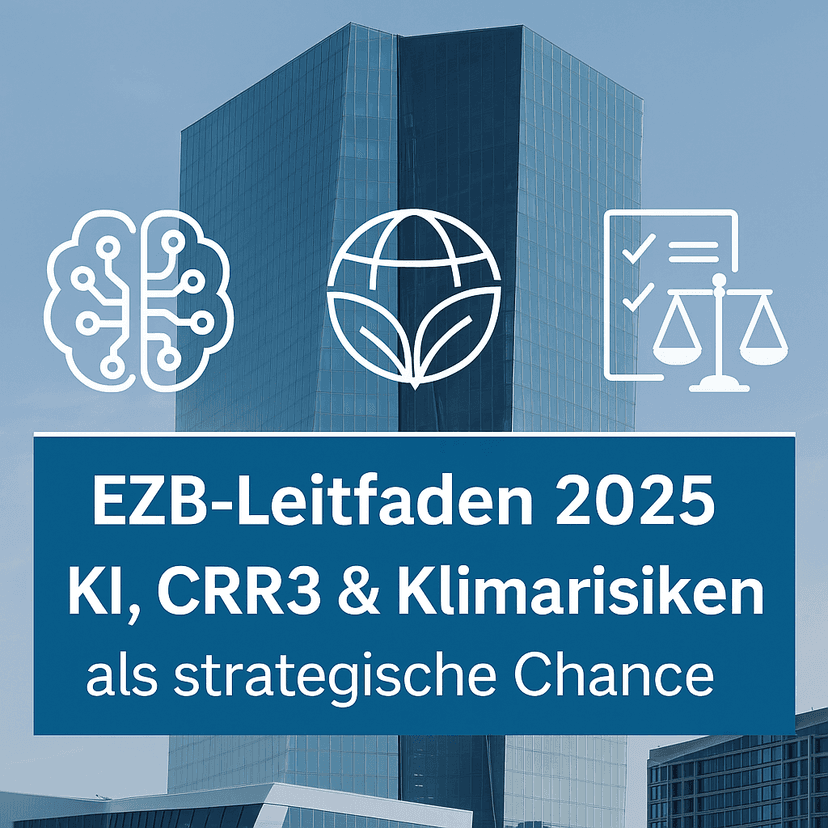
EZB-Leitfaden für interne Modelle: Strategische Orientierung für Banken in der neuen Regulierungslandschaft
Risikomanagement

EZB-Leitfaden für interne Modelle: Strategische Orientierung für Banken in der neuen Regulierungslandschaft

July 29, 2025
8 Min.

Die Juli-2025-Revision des EZB-Leitfadens verpflichtet Banken, interne Modelle strategisch neu auszurichten. Kernpunkte: 1) Künstliche Intelligenz und Machine Learning sind zulässig, jedoch nur in erklärbarer Form und unter strenger Governance. 2) Das Top-Management trägt explizit die Verantwortung für Qualität und Compliance aller Modelle. 3) CRR3-Vorgaben und Klimarisiken müssen proaktiv in Kredit-, Markt- und Kontrahentenrisikomodelle integriert werden. 4) Genehmigte Modelländerungen sind innerhalb von drei Monaten umzusetzen, was agile IT-Architekturen und automatisierte Validierungsprozesse erfordert. Institute, die frühzeitig Explainable-AI-Kompetenzen, robuste ESG-Datenbanken und modulare Systeme aufbauen, verwandeln die verschärften Anforderungen in einen nachhaltigen Wettbewerbsvorteil.

Andreas Krekel
Read
 Erklärbare KI (XAI) in der Softwarearchitektur: Von der Black Box zum strategischen Werkzeug
Digitale Transformation

Erklärbare KI (XAI) in der Softwarearchitektur: Von der Black Box zum strategischen Werkzeug

June 24, 2025
5 Min.

Verwandeln Sie Ihre KI von einer undurchsichtigen Black Box in einen nachvollziehbaren, vertrauenswürdigen Geschäftspartner.

Arosan Annalingam
Read
KI Softwarearchitektur: Risiken beherrschen & strategische Vorteile sichern
Digitale Transformation

KI Softwarearchitektur: Risiken beherrschen & strategische Vorteile sichern

June 19, 2025
5 Min.

KI verändert Softwarearchitektur fundamental. Erkennen Sie die Risiken von „Blackbox“-Verhalten bis zu versteckten Kosten und lernen Sie, wie Sie durchdachte Architekturen für robuste KI-Systeme gestalten. Sichern Sie jetzt Ihre Zukunftsfähigkeit.

Arosan Annalingam
Read
ChatGPT-Ausfall: Warum deutsche Unternehmen eigene KI-Lösungen brauchen
Künstliche Intelligenz - KI

ChatGPT-Ausfall: Warum deutsche Unternehmen eigene KI-Lösungen brauchen

June 10, 2025
5 Min.

Der siebenstündige ChatGPT-Ausfall vom 10. Juni 2025 zeigt deutschen Unternehmen die kritischen Risiken zentralisierter KI-Dienste auf.

Phil Hansen
Read
KI-Risiko: Copilot, ChatGPT & Co. -  Wenn externe KI durch MCP's zu interner Spionage wird
Künstliche Intelligenz - KI

KI-Risiko: Copilot, ChatGPT & Co. - Wenn externe KI durch MCP's zu interner Spionage wird

June 9, 2025
5 Min.

KI Risiken wie Prompt Injection & Tool Poisoning bedrohen Ihr Unternehmen. Schützen Sie geistiges Eigentum mit MCP-Sicherheitsarchitektur. Praxisleitfaden zur Anwendung im eignen Unternehmen.

Boris Friedrich
Read
Live Chatbot Hacking - Wie Microsoft, OpenAI, Google & Co zum unsichtbaren Risiko für Ihr geistiges Eigentum werden
Informationssicherheit

Live Chatbot Hacking - Wie Microsoft, OpenAI, Google & Co zum unsichtbaren Risiko für Ihr geistiges Eigentum werden

June 8, 2025
7 Min.

Live-Hacking-Demonstrationen zeigen schockierend einfach: KI-Assistenten lassen sich mit harmlosen Nachrichten manipulieren.

Boris Friedrich
Read
View All Articles