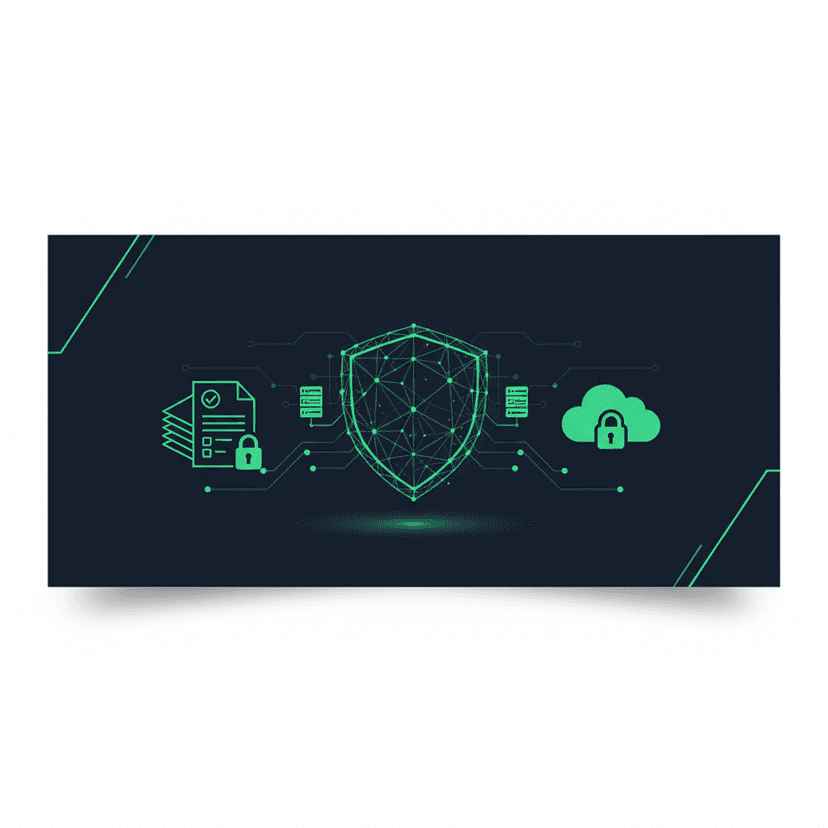
Proactive. Precise. Preventive.
Threat Analysis
Identify and understand threats before they become security incidents. Our professional threat analysis combines advanced technologies with expert analysis for comprehensive protection of your digital assets.
- ✓Early detection of potential threats
- ✓Comprehensive assessment of security risks
- ✓Tailored protection strategies
- ✓Practice-oriented recommendations for action
Your strategic success starts here
Our clients trust our expertise in digital transformation, compliance, and risk management
30 Minutes • Non-binding • Immediately available
For optimal preparation of your strategy session:
- Your strategic goals and objectives
- Desired business outcomes and ROI
- Steps already taken
Or contact us directly:
Certifications, Partners and more...








Threat Analysis
Our Strengths
- Extensive experience in detecting complex threats
- Combination of automated tools and expert analysis
- Access to the latest threat intelligence data
- Practice-oriented and actionable recommendations
⚠
Expert Tip
Regular updates to your threat analysis are essential to keep pace with the rapidly evolving cyber threat landscape. We recommend conducting a reassessment at least quarterly and following significant changes to your IT environment or after security incidents.
ADVISORI in Numbers
11+
Years of Experience
120+
Employees
520+
Projects
Our approach to threat analysis is systematic, methodical, and tailored to your specific requirements.
Our Approach:
Analysis of the organizational context and protection objectives
Identification and assessment of assets
Development of a threat catalog
Assessment and prioritization of threats
Development of protective measures
"A sound threat analysis is the foundation of a successful cybersecurity strategy. Only those who know and understand the threats relevant to their organization can implement targeted and efficient protective measures and minimize risks."

Sarah Richter
Head of Information Security, Cyber Security
Expertise & Experience:
10+ years of experience, CISA, CISM, Lead Auditor, DORA, NIS2, BCM, Cyber and Information Security
Our Services
We offer you tailored solutions for your digital transformation
Threat Intelligence & Analysis
Comprehensive analysis of current and emerging threats based on up-to-date threat intelligence data.
- Integration of threat feeds
- Analysis of attack vectors
- Assessment of APT risks
- Threat Hunting
Risk Assessment & Prioritization
Systematic assessment and prioritization of identified threats based on your specific environment.
- Attack Surface Mapping
- Risk classification
- Business Impact Analysis
- Prioritization by criticality
Protection Strategies & Implementation
Development and implementation of tailored protection strategies based on threat analysis.
- Defense-in-depth strategies
- Technical protective measures
- Process-related measures
- Monitoring concepts
Our Competencies in Security Operations (SecOps)
Choose the area that fits your requirements
IT Forensics
Digital traces are the key to investigating cyberattacks and IT security incidents. Our IT forensics experts support you in evidence preservation, analysis, and prevention — for maximum transparency and security.
Incident Management
Effective incident management is the key to successfully defending against and handling cyberattacks. We help you detect security incidents early, manage them professionally, and learn from them — for a resilient organization.
Incident Response
A well-conceived incident response plan is the key to successfully managing cyberattacks. We support you in rapid response, evidence preservation, and the sustainable recovery of your systems.
Log Management
We support you in the efficient collection, analysis, and management of log data. From strategy development to technical implementation – for a future-proof IT security infrastructure.
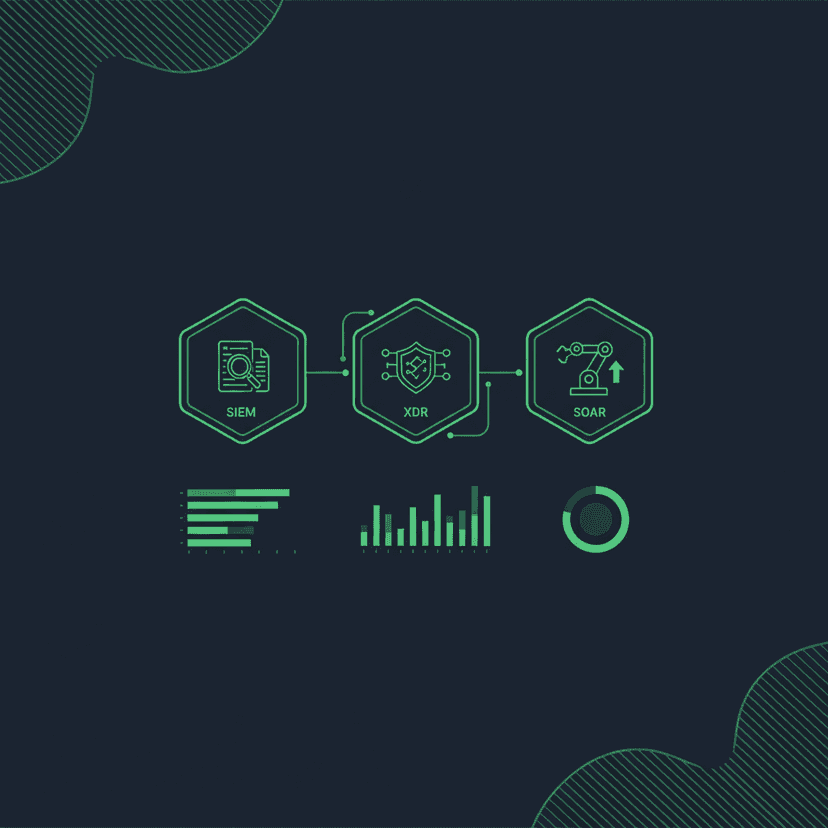
Security Information and Event Management (SIEM)
We support you in the implementation, optimization, and operation of your SIEM solutions for effective threat detection and security incident management.
Threat Detection
Enhance your cybersecurity through advanced threat detection that identifies modern attack methods before they can cause damage. Our tailored solutions combine the latest technologies, threat intelligence, and specialized expertise to detect complex threats at an early stage.
Frequently Asked Questions about Threat Analysis
How can an organization implement an effective threat analysis and benefit from it?
An effective threat analysis is fundamental to a proactive cybersecurity strategy. It enables organizations to detect threats early and develop targeted countermeasures before damage occurs. A structured approach combines modern technologies with methodical procedures and continuous improvement. Methodical Approach: Develop a clearly defined process with standardized methods for identifying, analyzing, and assessing threats, carried out in regular cycles Consider both external threats (e.g., cybercriminals, state actors, hacktivists) and internal risks (e.g., insider threats, unintentional data leaks) in your analysis Implement an asset management system that identifies, categorizes, and assesses the protection requirements of critical assets Use established frameworks such as MITRE ATT&CK, STRIDE, or OWASP for structured capture and categorization of threats Develop a company-specific threat model that accounts for your specific business processes, IT infrastructure, and protection requirements Threat Intelligence Integration: Implement automated threat intelligence feeds from various sources to obtain current information on threats, vulnerabilities, and attack techniques Aggregate and correlate data from.
Which modern technologies and methods are advancing threat analysis?
Threat analysis has undergone fundamental development in recent years through effective technologies and methodological approaches. Modern solutions enable more precise, faster, and more comprehensive detection and assessment of threats than ever before. Artificial Intelligence and Machine Learning: Implement AI-based anomaly detection that learns normal user, system, and network behavior and can identify deviations that may indicate potential threats Use deep learning algorithms to analyze large volumes of data and identify subtle correlations between various threat indicators Apply Natural Language Processing (NLP) to evaluate unstructured data from threat intelligence feeds, security blogs, and social media Implement self-learning systems that continuously improve their detection capabilities and adapt to new threat patterns Use predictive analytics to forecast potential future threats based on historical data and current trends Automation and Orchestration: Establish automated workflows for the collection, aggregation, and analysis of threat data from various sources Implement SOAR platforms (Security Orchestration, Automation and Response) to integrate various security tools.
How can organizations link their threat analysis to their overall security strategy?
A successful cybersecurity strategy requires the smooth integration of threat analysis into all relevant security processes and functions within the organization. Without this linkage, threat analysis remains an isolated tool with limited value. Strategic Alignment: Develop a cyclical feedback loop between threat analysis and security strategy, where insights from threat analysis influence strategic direction and strategic priorities determine the focus of threat analysis Align your threat analysis with organizational objectives and business risks to maximize relevance and business value Implement a risk-based approach to your security strategy that is grounded in threat analysis insights and concentrates resources on the most relevant threats Establish a continuous improvement process that provides for regular reviews and adjustments to the security strategy based on evolving threats Integrate threat intelligence into your strategic roadmap for early planning of security measures against emerging threats Operational Integration: Use the results of threat analysis to configure and optimize security controls such as firewalls,.
How can organizations continuously improve their threat analysis capabilities?
Continuously improving threat analysis capabilities is critical for an effective cybersecurity strategy given the constantly evolving threat landscape. A systematic approach to developing these capabilities encompasses several dimensions. Maturity Models and Assessments: Implement a maturity model for your threat analysis capabilities that evaluates various dimensions such as processes, technology, expertise, and integration Conduct regular self-assessments and external evaluations to determine the current maturity level and identify areas for improvement Use established frameworks such as the Cyber Threat Intelligence Capability Maturity Model (CTI-CMM) or the Intelligence Cycle for structured assessment Define clear objectives and milestones for the development of your threat analysis capabilities, based on assessment results Create a multi-year roadmap for the systematic advancement of threat analysis capabilities, aligned with the organization's overall strategy Team and Competency Development: Invest in continuous training and development of your team through specialized courses, certifications, and conference participation on topics such as threat intelligence, malware analysis, and digital forensics.
What role does threat intelligence play in threat analysis and how can it be used effectively?
Threat intelligence forms the foundation of effective threat analysis by providing current, relevant, and context-specific information about potential attackers, their methods, and objectives. Targeted integration of threat intelligence into the security strategy enables a proactive protection approach. Types and Sources of Threat Intelligence: Use tactical intelligence (e.g., IOCs, malware signatures) for the immediate detection of known threats by integrating it into security controls such as firewalls, EDR, or SIEM systems Integrate operational intelligence (e.g., information on TTPs — Tactics, Techniques, and Procedures) for a deeper understanding of attacker methods and to develop effective detection and defense strategies Consider strategic intelligence (e.g., threat trends, attacker motivations) for long-term security planning and resource allocation Combine various intelligence sources such as commercial feeds, open source intelligence, information sharing communities, and your own internal findings Establish a structured process for the continuous evaluation and selection of relevant intelligence sources based on factors such as quality, currency, and relevance to.
How can organizations use threat analyses to develop targeted prevention strategies?
Translating threat analyses into effective prevention strategies is critical to maximizing the value of your security investments. Systematic implementation of the insights gained enables targeted and efficient protective measures. Strategic Planning: Develop a defensive matrix that links identified threats with corresponding defense strategies and security controls Implement a risk-based approach that prioritizes security measures based on risk assessment and business relevance Create a multi-tiered protection plan with short-term quick wins, medium-term improvements, and long-term strategic measures Use frameworks such as the NIST Cybersecurity Framework or ISO 27001 as a reference to ensure your prevention strategies cover all relevant areas Define clear protection objective priorities (e.g., availability vs. confidentiality) based on specific threats and business requirements Technical Implementation: Implement defense-in-depth architectures with multiple layers of protection specifically aligned to the identified threat vectors Develop tailored security control sets for various applications and systems based on their specific threat exposure Use threat-informed defense through targeted configuration of.
What role do Advanced Persistent Threats (APTs) play in the modern threat landscape?
Advanced Persistent Threats (APTs) represent a particularly sophisticated form of cyberattack carried out by highly skilled attackers with substantial resources. Understanding them is indispensable for comprehensive threat analysis in today's cybersecurity landscape. Characteristics and Evolution: Recognize the defining characteristics of APTs: targeted attacks, long-term campaigns, advanced techniques, extensive resources, and strategic objectives such as espionage, sabotage, or long-term compromise Understand the evolution of APTs from early state-directed campaigns to diversified actors, including cybercriminals employing APT-like techniques for financial gain Consider the increasing availability of APT tools on the dark web, which is leading to a "democratization" of advanced attack techniques Analyze evolving tactics such as supply chain attacks, living-off-the-land techniques, and the exploitation of legitimate tools for malicious purposes Observe the increasing specialization and division of labor within APT groups, leading to highly professional operations Actors and Motivations: Identify various APT actors and their specific motivations, from state-sponsored groups (espionage, sabotage) to financially motivated cybercriminals.
How can organizations effectively integrate threat hunting into their threat analysis?
Threat hunting is a proactive cybersecurity discipline that goes beyond traditional detection methods by actively searching for previously undetected threats within the IT environment. Effective integration into threat analysis significantly improves detection capabilities. Strategic Foundations: Establish a structured, hypothesis-based approach to threat hunting that builds on the insights from your threat analysis Develop specific hunting hypotheses based on current threat intelligence, industry-specific threats, and known TTPs (Tactics, Techniques, and Procedures) of relevant attackers Prioritize hunting activities based on identified risks and the criticality of assets and systems Integrate threat hunting as a continuous process into your security operations cycle, not as a one-time or sporadic activity Develop a program with various hunting levels, from basic, regular search activities to in-depth, specialized hunts for advanced threats Methodical Approach: Implement various hunting methods such as IOC sweeping (searching for known indicators), TTP hunting (searching for suspicious behavioral patterns), and anomaly hunting (detecting unusual activities) Use frameworks such.
How can an organization systematically analyze and reduce its attack surface?
The systematic analysis and reduction of the attack surface is a fundamental component of effective threat analysis and cybersecurity strategy. A comprehensive approach combines technical measures with organizational processes and continuous monitoring. Attack Surface Mapping and Inventory: Implement a continuous asset discovery process that automatically captures all systems, applications, network components, and cloud resources and documents them in a central CMDB (Configuration Management Database) Create a comprehensive network topology that visualizes connections, data flows, and trust relationships between various systems and network segments Conduct regular external attack surface scans to identify exposed services, open ports, unprotected resources, and unpatched internet-facing systems Implement shadow IT discovery processes to identify unauthorized or unmanaged IT resources, which are often particularly vulnerable Create a risk map of your attack surface that visualizes the criticality of various assets, their vulnerabilities, and potential attack paths Fundamental Reduction Strategies: Implement the principle of least privilege for user accounts, applications, and systems to.
How can threat analysis be integrated into DevSecOps processes?
Integrating threat analysis into DevSecOps processes is critical for a proactive security strategy in modern development environments. By incorporating security considerations early, organizations can reduce risks while maintaining development velocity. Shift-Left Approach: Implement threat modeling as an integral part of the planning and design phase of new applications or features, before the first line of code is written Use automated tools for Static Application Security Testing (SAST) in your CI/CD pipeline to identify security issues early in the code Integrate vulnerability scanning into your build processes to detect known vulnerabilities in dependencies and components used Develop security user stories and abuse cases as part of your agile development methodology to define security requirements early Establish security champions in development teams who act as a bridge between security and development and bring threat intelligence into the development process Pipeline Integration: Implement automated security tests in your CI/CD pipeline that run on every commit or build and.
How do threat analyses differ for on-premises, cloud, and hybrid environments?
Conducting effective threat analyses requires a deep understanding of the specific characteristics of different IT environments. On-premises, cloud, and hybrid architectures each bring their own challenges and threat models. On-Premises Environments: Focus on physical security aspects such as access controls to server rooms, network infrastructure, and terminal devices, which are typically delegated to the provider in cloud scenarios Consider the particular importance of perimeter security, as clear network boundaries with defined entry and exit points exist Analyze risks associated with legacy systems and applications, which are more commonly found in on-premises environments and often present particular vulnerabilities Assess internal threats such as privileged administrators with direct physical access to systems and infrastructure Consider challenges with patch management and updates that can arise in isolated or complex on-premises environments Cloud Environments: Implement the shared responsibility model as the basis of your threat analysis, with a clear distinction between provider and customer responsibilities Analyze cloud-specific threat vectors.
What role do cyber threat frameworks play in threat analysis?
Cyber threat frameworks provide structured approaches for categorizing, analyzing, and communicating cyber threats. They establish a common vocabulary and reference model for various stakeholders and enable a systematic approach to threat analysis. MITRE ATT&CK Framework: Use the ATT&CK Framework as a comprehensive knowledge base for known attack tactics, techniques, and procedures (TTPs) of various threat actors Implement ATT&CK as the basis for your threat intelligence activities by mapping observed threats to the corresponding techniques in the framework Develop a detection coverage map that compares your detection capabilities against the various ATT&CK techniques and identifies gaps Use the framework for red team exercises and purple team activities to simulate realistic attack scenarios and test defensive measures Use ATT&CK to prioritize security measures based on the frequency and relevance of specific attack techniques for your organization Cyber Kill Chain: Use the Cyber Kill Chain as a conceptual model to understand the various phases of a cyberattack and.
How can organizations integrate IoT- and OT-specific threats into their threat analysis?
The integration of IoT (Internet of Things) and OT (Operational Technology) into enterprise environments creates new attack vectors and security challenges. A comprehensive threat analysis must account for these specific technologies and their unique risk profiles. Understanding the Specific Threat Landscape: Analyze the particular types of threats for IoT/OT environments such as manipulation of sensor data, physical sabotage, denial-of-service attacks, or takeover of devices to create botnets Consider the potentially far-reaching consequences of attacks on OT systems that control physical processes and, if compromised, can pose risks to human life, the environment, or critical infrastructure Identify industry-specific threats for your IoT/OT environments, e.g., in manufacturing, energy, healthcare, or smart buildings Understand the increasing convergence of IT and OT and the resulting security implications, particularly the exposure of traditionally isolated OT systems to IT-based attacks Consider the expanded attack potential arising from the massive increase in devices and connections in IoT/OT networks Asset Inventory and Risk.
How can simulations and exercises improve threat analysis?
Simulations and exercises are indispensable tools for validating, improving, and operationalizing threat analyses. They enable organizations to test theoretical threat models in practice, identify vulnerabilities, and improve response capabilities. Red Team Exercises: Conduct advanced red team operations that specifically test attack vectors and techniques identified in your threat analysis Integrate current threat intelligence into your red team exercises to simulate realistic attack methods of relevant threat actors Combine technical attacks with social engineering elements for comprehensive security assessments that consider both technical and human factors Develop long-term, covert red team campaigns that simulate Advanced Persistent Threats (APTs) and test your organization's detection capabilities over extended periods Conduct targeted exercises specifically aimed at validating particular hypotheses or assumptions from your threat analysis Purple Team Approaches: Implement structured purple team exercises in which red teams and blue teams collaborate to conduct attacks, improve detection, and enhance defensive measures Use frameworks such as MITRE ATT&CK as a common.
How can organizations integrate social engineering risks into their threat analysis?
Social engineering represents one of the most effective and frequently used attack methods. A comprehensive threat analysis must account for these human-centric attack vectors and develop appropriate defense strategies. Typologies and Vectors: Identify the various forms of social engineering attacks relevant to your organization: phishing, spear phishing, whaling, vishing (voice phishing), smishing (SMS phishing), pretexting, baiting, and physical social engineering methods Analyze industry-specific social engineering trends and tactics that are specifically targeted at organizations in your sector Assess social engineering as an initial access vector for more complex attack campaigns such as ransomware, data theft, or espionage Consider the increasing sophistication of social engineering attacks through the use of AI-generated content, deep fakes, and tailored attack scenarios Understand the psychological principles that make social engineering attacks successful: authority, scarcity, reciprocity, social proof, liking, and urgency Risk Assessment and Modeling: Develop a social engineering risk assessment framework that considers various factors: visibility and public presence of.
How does the GDPR affect the conduct of threat analyses?
The GDPR imposes specific requirements on the handling of personal data that must also be considered when conducting threat analyses. A data protection-compliant approach integrates privacy aspects into the threat analysis process from the outset. Legal Framework: Consider GDPR requirements in your threat analysis as part of compliance risk and as an asset to be protected in terms of the confidentiality of personal data Integrate data protection-by-design principles into your threat analysis processes, particularly when assessing risks to the rights and freedoms of data subjects Understand the GDPR requirements on the security of processing (Art. 32) as a minimum standard for your security measures Account for specific GDPR provisions such as reporting obligations in the event of personal data breaches (Art. 33, 34) in your incident response plans Integrate insights from Data Protection Impact Assessments (DPIAs) into your threat analysis, particularly when identifying assets requiring protection and potential impacts Data Collection and Analysis: When collecting.
How can artificial intelligence be used to improve threat analysis?
Artificial intelligence (AI) and machine learning (ML) are fundamentally changing the way organizations analyze, detect, and defend against threats. These technologies enable flexible, fast, and precise analysis of large data volumes and help identify complex threat patterns. Anomaly Detection and Behavioral Analysis: Implement AI-based behavioral analysis systems that learn from normal user, system, and network behavior and can detect deviations that may indicate potential threats Use unsupervised learning algorithms to detect novel and previously unknown threats (zero-day attacks) that may be missed by signature-based systems Apply deep learning models to detect subtle anomalies in complex data streams, such as network traffic, API calls, or user activities Implement User and Entity Behavior Analytics (UEBA) that analyze the behavior of users and entities over time and identify high-risk activities Use time series anomaly detection to identify unusual activity patterns that may indicate threats such as slow, targeted attacks Pattern Recognition and Correlation: Apply machine learning algorithms to.
How can organizations link their threat analysis to business impact?
An effective threat analysis must be closely linked to the business context in order to deliver truly valuable insights. Translating technical risks into business impacts is critical for informed decisions and the prioritization of security measures. Identification of Critical Business Processes: Conduct Business Impact Analyses (BIA) to identify, assess, and document critical business processes, their dependencies, and recovery objectives Create a hierarchy of business functions and processes with clear dependencies and criticality ratings to better understand the impact of security incidents Quantify the financial and operational impacts of process disruptions through metrics such as revenue impact, productivity loss, or recovery costs Identify critical time windows and business cycles in which certain systems or processes are particularly critical (e.g., quarter-end, tax periods, seasonal peaks) Consider not only direct operational impacts but also indirect consequences such as reputational damage, regulatory consequences, or loss of market share Linking Assets and Business Processes: Create a comprehensive mapping matrix that.
What role does threat intelligence sharing play in threat analysis?
Threat intelligence sharing is a powerful tool for improving threat analysis. By exchanging threat information, organizations can benefit from the insights and experiences of others and thereby strengthen their own defense capabilities. Ecosystem and Communities: Participate in industry-specific Information Sharing and Analysis Centers (ISACs) or Information Sharing and Analysis Organizations (ISAOs) that share threat information tailored to your sector Join regional or national threat sharing initiatives, which often also incorporate information from government agencies and law enforcement authorities Build trusted relationships with peer organizations in your industry for direct, bilateral exchange of threat information and best practices Use open source threat intelligence communities and platforms that collect and share freely accessible threat information Consider participating in threat intelligence programs offered by security vendors that aggregate information from their customers and return enriched intelligence Types of Shared Information: Share and use tactical indicators such as IPs, domains, hashes, and URLs that can be used to detect.
How can organizations integrate a comprehensive vulnerability management strategy into their threat analysis?
An effective vulnerability management strategy is a critical component of comprehensive threat analysis. Integrating both areas enables context-based prioritization of vulnerabilities based on actual threats and business risks. Comprehensive Vulnerability Detection: Implement a multi-layered approach to vulnerability detection that combines various techniques such as regular automated scans, manual penetration tests, code reviews, and bug bounty programs Extend the scope of your vulnerability assessments beyond traditional IT systems to cloud environments, containers, IoT devices, OT systems, and mobile applications Integrate vulnerability detection into the entire software development lifecycle by implementing DevSecOps practices and automated security tests in CI/CD pipelines Conduct regular configuration audits to identify configuration errors and deviations from security baselines, which are often just as critical as software vulnerabilities Implement continuous monitoring to detect new vulnerabilities promptly as they become known or as new assets are added Threat Intelligence-Based Prioritization: Integrate current threat intelligence into your vulnerability management process to prioritize vulnerabilities that are.
Success Stories
Discover how we support companies in their digital transformation
Digitalization in Steel Trading
Klöckner & Co
Digital Transformation in Steel Trading
Case Study

Results
Over 2 billion euros in annual revenue through digital channels
Goal to achieve 60% of revenue online by 2022
Improved customer satisfaction through automated processes
AI-Powered Manufacturing Optimization
Siemens
Smart Manufacturing Solutions for Maximum Value Creation
Case Study

Results
Significant increase in production performance
Reduction of downtime and production costs
Improved sustainability through more efficient resource utilization
AI Automation in Production
Festo
Intelligent Networking for Future-Proof Production Systems
Case Study

Results
Improved production speed and flexibility
Reduced manufacturing costs through more efficient resource utilization
Increased customer satisfaction through personalized products
Generative AI in Manufacturing
Bosch
AI Process Optimization for Improved Production Efficiency
Case Study

Results
Reduction of AI application implementation time to just a few weeks
Improvement in product quality through early defect detection
Increased manufacturing efficiency through reduced downtime
Let's
Work Together!
Is your organization ready for the next step into the digital future? Contact us for a personal consultation.
Your strategic success starts here
Our clients trust our expertise in digital transformation, compliance, and risk management
Ready for the next step?
Schedule a strategic consultation with our experts now
30 Minutes • Non-binding • Immediately available
For optimal preparation of your strategy session:
Your strategic goals and challenges
Desired business outcomes and ROI expectations
Current compliance and risk situation
Stakeholders and decision-makers in the project
Prefer direct contact?
Direct hotline for decision-makers
Strategic inquiries via email
Detailed Project Inquiry
For complex inquiries or if you want to provide specific information in advance