Strategic. Sustainable. Secure.
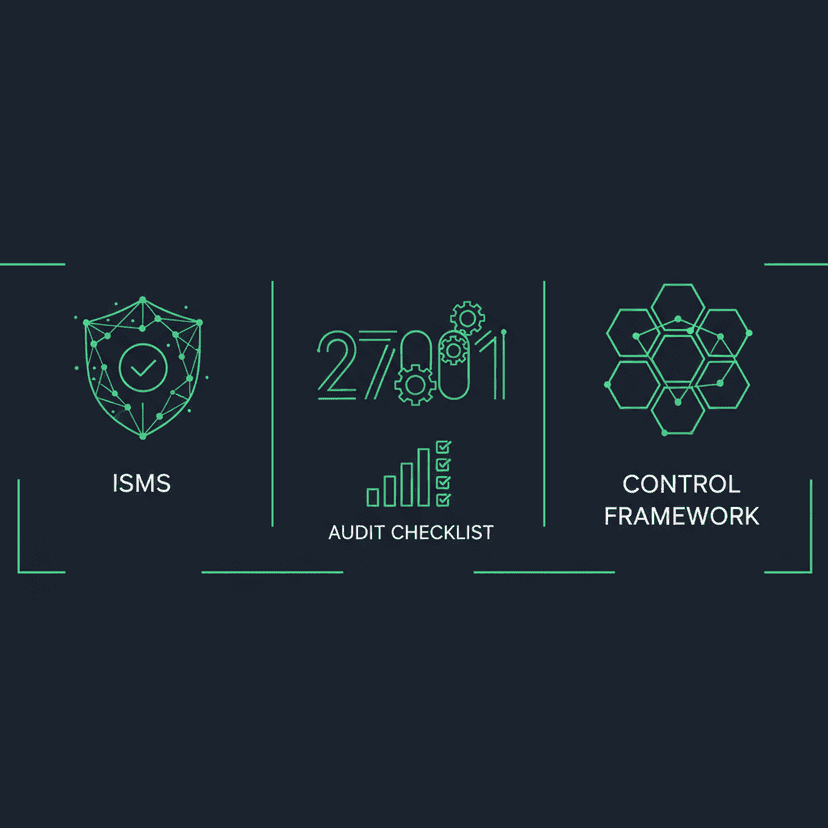
ISMS - Information Security Management System
We help you develop a robust information security strategy that aligns ISMS implementation, ISO 27001 compliance, and business objectives. From maturity assessment through roadmap to full governance — for sustainable information security in your organization.
- ✓Development of comprehensive security strategies and concepts
- ✓Integration of Security by Design into business processes
- ✓Building resilient information security structures
- ✓Implementation of effective governance and control mechanisms
Your strategic success starts here
Our clients trust our expertise in digital transformation, compliance, and risk management
30 Minutes • Non-binding • Immediately available
For optimal preparation of your strategy session:
- Your strategic goals and objectives
- Desired business outcomes and ROI
- Steps already taken
Or contact us directly:
Certifications, Partners and more...








Information Security Strategy & Governance Framework
Our Strengths
- Comprehensive expertise in information security and risk management
- Interdisciplinary team with technical and strategic expertise
- Proven methods for efficient strategy development and implementation
- Comprehensive approach with a focus on business support and compliance
⚠
Expert Tip
A successful Information Security Strategy is more than just a technical concept. Integration into corporate culture and alignment with business objectives are critical for its effectiveness and sustainability. A comprehensive view of people, processes, and technology forms the basis for a resilient security concept.
ADVISORI in Numbers
11+
Years of Experience
120+
Employees
520+
Projects
Our approach to developing and implementing an Information Security Strategy is systematic, practice-oriented, and tailored to your specific requirements.
Our Approach:
Analysis of the existing security landscape and identification of risk areas
Development of a tailored security strategy and a comprehensive concept
Implementation of governance structures and control mechanisms
Integration into existing business processes and corporate culture
Continuous monitoring, reporting, and further development
"A sustainable Information Security Strategy combines technology, processes, and people into a comprehensive security concept. With a structured approach, the increasing requirements can be met efficiently while simultaneously achieving competitive advantages through trustworthy digital business models."

Sarah Richter
Head of Information Security, Cyber Security
Expertise & Experience:
10+ years of experience, CISA, CISM, Lead Auditor, DORA, NIS2, BCM, Cyber and Information Security
Our Services
We offer you tailored solutions for your digital transformation
Strategic Security Consulting
Development of tailored security strategies and concepts to support your business objectives and fulfill regulatory requirements.
- Development of comprehensive security strategies
- Alignment with business objectives and processes
- Definition of security roadmaps
- Security transformation and change management
Security Governance & Compliance
Development and implementation of governance structures and compliance measures for sustainable information security management.
- Building security governance structures
- Development of security policies and standards
- Implementation of control mechanisms
- Compliance management and reporting
Security Awareness & Culture
Development and implementation of programs to strengthen security awareness and establish a positive security culture.
- Security awareness programs
- Culture development and change management
- Training and workshops
- Measurement and continuous improvement
Our Competencies in Information Security Management System - ISMS
Choose the area that fits your requirements
Cyber Security Framework
82% of all cyberattacks exploit known vulnerabilities that a structured framework would have prevented (Verizon DBIR 2024). ADVISORI implements proven frameworks such as NIST CSF 2.0, ISO 27001:2022 and BSI IT-Grundschutz — tailored to your industry, regulatory requirements and risk profile.
Cyber Security Governance
We support you in establishing structured control and management processes for your cyber security. From developing a security governance framework and IT security policies to implementing effective controls — for sustainable information security governance.
Cyber Security Strategy
Develop a business-oriented cyber security strategy that protects your critical assets while enabling digital innovation. Our tailored strategy concepts combine threat analysis, SOC setup, incident response and cyber resilience with your business objectives — for measurable protection against current cyber threats.
Information Security Governance
Effective information security governance defines clear roles — from the Information Security Officer through the CISO Office to management reviews — establishes a coherent security organization, and ensures your ISMS under ISO 27001 is not just certifiable but genuinely operational. ADVISORI supports you as an ISO 27001-certified consulting firm in building a governance structure that binds accountability, anchors information security policies hierarchically, and ensures continuous ISMS improvement through systematic management reviews and KPI-based reporting.
KPI Framework
What is not measured cannot be managed. We develop KPI frameworks based on ISO 27004, NIST CSF and CIS Benchmarks — so you can not only track MTTD, MTTR, patch compliance and phishing click rate, but actively manage them and report reliably to your board and regulators.
Policy Framework
An information security policy is the central governance document of your ISMS. It defines binding security objectives, responsibilities, and principles — from the strategic top-level policy through topic-specific guidelines to operational work instructions. ISO 27001 Clause 5.2 and Annex A Control A.5.1 explicitly require such a hierarchical policy framework. Likewise, NIS2 Article 21 mandates “concepts for risk analysis and security for information systems.” Without a structured IT security policy framework, organizations regularly fail certification audits, regulatory examinations, and day-to-day security operations. ADVISORI develops information security policies that are not only compliant but functional in everyday operations — clearly written, well-structured, and sustainably maintainable. Our approach combines ISO 27001, BSI IT-Grundschutz (ORP.1), and NIST SP 800-53 into a policy framework that covers your industry-specific requirements.
Security Measures
Develop a comprehensive protection concept with technical, organizational, and personnel security measures that sustainably secure your IT infrastructure, data, and business processes. Our customized security solutions ensure resilience, compliance, and trust throughout your entire organization.
Zero Trust Framework
NIS2, DORA, and the BSI Situation Report 2024 make it clear: perimeter security has failed. 70% of successful cyberattacks exploit lateral movement — exactly what Zero Trust prevents. ADVISORI implements Zero Trust architectures aligned to NIST SP 800-207, continuously verifying every identity, every device, and every data stream. As a BeyondTrust partner, we combine strategic consulting with leading PAM technology for a security architecture that meets regulatory requirements and measurably reduces attack surfaces.
Frequently Asked Questions about ISMS - Information Security Management System
How do you develop a future-ready Information Security Strategy?
A future-ready Information Security Strategy combines business enablement with effective risk management and continuously adapts to the evolving threat landscape. Building such a strategy requires a systematic, comprehensive approach that goes far beyond technical measures. Foundation Analysis and Strategic Alignment: Conducting a comprehensive analysis of the corporate landscape including the business model, digital transformation, and strategic initiatives as the basis for alignment Identifying and assessing critical information assets and processes through structured workshops with key functions from business and IT Developing a differentiated understanding of the current and future threat landscape through threat intelligence and scenario analyses Establishing clear security objectives and KPIs that are directly linked to corporate goals and make their achievement measurable Conducting a gap analysis between the current state and the target security level, taking into account industry-specific benchmarks Governance and Organizational Structure: Developing a tailored security governance model with clear allocation of responsibilities and decision-making processes Establishing an effective Three-Lines-of-Defense.
What role does Security by Design play in an Information Security Strategy?
Security by Design is a fundamental building block of an effective Information Security Strategy and enables the early integration of security requirements into the development process of IT systems, applications, and business processes. This preventive approach is not only more cost-efficient than retroactive security measures, but also creates the foundation for resilient digital products and services. Core Principles and Implementation Approach: Integrating security requirements as early as the conception and design phase of new systems, applications, and business processes Establishing a structured requirements engineering process that systematically captures and prioritizes security requirements Implementing a Secure Development Lifecycle (SDL) with defined security gates at critical development milestones Applying the Defense-in-Depth principle through multi-layered security controls at various system levels Implementing the Least-Privilege principle in the design of access permissions and system architectures Integration into Development Processes: Embedding Security Champions in development teams as multipliers for security-conscious development Implementing automated security tests in CI/CD pipelines for continuous.
How do you build an effective Security Governance Framework?
An effective Security Governance Framework creates the foundation for the systematic management of information security within the organization and anchors security as an integral component of corporate governance. It defines responsibilities, processes, and control mechanisms, thereby establishing the organizational prerequisites for a sustainable security level. Structural Components: Establishing a multi-tiered policy framework with a clear hierarchy ranging from overarching principles to detailed procedural instructions Implementing a security governance structure with defined committees at the strategic, tactical, and operational levels Defining clear roles and responsibilities according to the RACI model for all security-relevant tasks Building a Three-Lines-of-Defense model with a clear separation between operational responsibility, risk management, and independent review Integrating security governance into existing corporate governance structures and decision-making processes Process Integration and Risk Management: Developing an integrated Information Security Management System (ISMS) in accordance with ISO 27001 or comparable standards Implementing a systematic risk management process with a standardized methodology for risk assessment and.
How do you design an effective security awareness program?
An effective security awareness program goes far beyond general information campaigns and aims at sustainable behavioral change and the development of a positive security culture. The success of such a program is based on a systematic, target-group-oriented approach with continuous further development. Strategic Foundations and Planning: Developing a comprehensive awareness strategy with clear objectives, target groups, and success criteria as the basis for all measures Conducting a baseline measurement of current security awareness as a starting point and benchmarking reference Identifying critical behaviors and security topics based on risk analyses and incident data Creating a long-term awareness roadmap with thematic priorities and milestones Ensuring sufficient resources and management support as a prerequisite for sustainable impact Target Group Orientation and Personalization: Segmenting employees into different target groups based on roles, responsibilities, and specific risks Developing tailored awareness programs for high-risk groups such as executives, administrators, or developers Accommodating different learning types and preferences through diverse formats.
How do you integrate Information Security into digital transformation?
The successful integration of Information Security into digital transformation is critical for the sustainable development of effective business models and processes. Rather than viewing security as an obstacle, it should be positioned as a strategic enabler that builds trust and safeguards new digital business opportunities. Strategic Alignment and Governance: Developing a security strategy that is explicitly aligned with the company's digital transformation strategy and supports its objectives Establishing a Digital Security Governance Board with representatives from business, IT, and security for joint management Integrating security KPIs into the transformation scorecard for continuous measurement of security maturity Implementing agile security governance models that can keep pace with the speed of digital transformation Creating dedicated roles such as Digital Security Architects or Security Champions within transformation teams Security by Design in Digital Initiatives: Anchoring security requirements and risk assessments as mandatory elements in the conception phase of digital initiatives Implementing security design principles such as Zero Trust,.
How do you develop an effective Cloud Security Strategy?
An effective Cloud Security Strategy takes into account the specific requirements and risks of cloud environments and integrates these into the organization's overarching security concept. It addresses both technical and organizational aspects and creates a consistent framework for the secure use of cloud services. Strategic Foundations and Governance: Developing a Cloud Security Strategy that is aligned with the overarching cloud strategy and the company's business model Establishing a Cloud Governance Board with clear responsibilities for security decisions in the cloud Defining cloud-specific security policies and standards, taking into account the Shared Responsibility Model Implementing a Cloud Risk Assessment Framework for the systematic evaluation of cloud risks Developing a Cloud Security Reference Architecture as a blueprint for secure cloud implementations Implementation of Technical Security Controls: Establishing a multi-tiered Identity and Access Management (IAM) with strong authentication and granular authorization concepts Implementing Cloud Security Posture Management (CSPM) for continuous monitoring and enforcement of security policies Building a.
How can you efficiently build a Security Operations Center (SOC)?
Building an effective Security Operations Center (SOC) requires a well-thought-out strategy that combines people, processes, and technologies in a comprehensive approach. A modern SOC goes beyond pure monitoring functions and evolves into a strategic cybersecurity hub that enables active threat detection and defense. Strategic Planning and Design: Developing a SOC strategy with clear objectives, KPIs, and a maturity model for continuous further development Defining the optimal SOC operating model (internal, outsourced, hybrid, or virtual) based on resources, requirements, and risk appetite Establishing a multi-year SOC implementation plan with prioritized use cases and realistic milestones Conducting a comprehensive inventory of systems, applications, and infrastructures to be monitored Developing a SOC reference architecture with a focus on scalability, redundancy, and performance Team and Competency Development: Building a skills matrix for various SOC roles and developing corresponding career paths Implementing a continuous training program including practical cyber range exercises and simulations Establishing 24/7 coverage through appropriate shift models,.
How do you implement effective vulnerability management?
Effective vulnerability management goes far beyond scanners and patch management and establishes a comprehensive, continuous process for the systematic identification, prioritization, and remediation of security vulnerabilities. It integrates technical and organizational measures into a consistent risk minimization approach. Foundation Building and Process Design: Developing a comprehensive vulnerability management strategy and policy with clear objectives, roles, and responsibilities Establishing a systematic asset inventory as the basis for complete scan coverage and risk assessment Defining Service Level Agreements (SLAs) for the remediation of vulnerabilities based on risk categories and system criticality Implementing a standardized vulnerability management lifecycle from detection to verification of remediation Integrating vulnerability management into existing IT service management and change management processes Technical Implementation and Scanning: Building a multi-layered scanning infrastructure for various environments (internal, external, cloud, IoT, OT, etc.) Implementing continuous/daily scans for critical systems and risk-based scanning frequencies for other assets Integrating diverse scanning approaches such as network scans, authenticated scans, agent-based.
How do you develop an effective Information Security Compliance Strategy?
An effective Information Security Compliance Strategy combines the fulfillment of regulatory requirements with operational security excellence and integrates compliance as a strategic enabler into the organization's overall security strategy. Rather than an isolated checkbox approach, an integrated compliance framework should be developed. Compliance Landscape Analysis and Architecture: Conducting a comprehensive analysis of all relevant compliance requirements (laws, industry standards, contractual requirements) with relevance to information security Developing an integrated compliance framework with a common governance structure for various regulatory regimes (ISO 27001, GDPR, NIS2, KRITIS, industry-specific requirements) Identifying synergies and overlaps between different requirement catalogs to avoid duplication of effort Implementing a continuous regulatory watch process for early identification of new requirements and regulatory changes Developing a multi-year compliance roadmap with prioritized measures and a clear business case Integration into Governance and Management Processes: Anchoring compliance responsibilities in security governance structures with clear roles according to the RACI principle Implementing an integrated policy framework that.
How do you develop a comprehensive data protection strategy within the framework of information security?
A comprehensive data protection strategy overcomes the separation between technical data protection and legal compliance and integrates the protection of personal data smoothly into information security management. It connects legal requirements with operational feasibility and creates a consistent framework for handling personal data. Strategic Alignment and Governance: Developing an integrated privacy strategy that positions data protection as part of information security and aligns it with the corporate strategy Establishing a clear governance structure with defined roles and responsibilities for data protection (DPO, Privacy Champions, business units) Implementing a Privacy Committee as a steering body with representatives from data protection, security, IT, legal, and relevant business areas Developing an integrated policy framework for data protection and information security with consistent principles and standards Harmonizing data protection compliance activities with other compliance requirements for maximum efficiency Data Governance and Privacy Management: Implementing a systematic data categorization model with specific labeling of personal and sensitive data Building a.
How do you design effective Incident Response Management?
Effective Incident Response Management is critical for minimizing damage and rapidly restoring normal operations following security incidents. It encompasses not only technical measures but also clear processes, organizational structures, and proactive incident management. Strategic Foundations and Preparation: Developing a comprehensive Incident Response Strategy as the basis for all operational measures and processes Establishing an Incident Response Team with clear roles, responsibilities, and escalation paths Implementing a documented Incident Response Plan with detailed playbooks for various incident types Conducting regular Incident Response exercises and simulations to test processes and team coordination in practice Building strategic partnerships with external Incident Response experts for special cases and capacity expansion Incident Management Process: Establishing a structured incident lifecycle from detection to lessons learned (preparation, identification, containment, eradication, recovery, learning) Implementing an incident triage process for rapid assessment and prioritization of incoming security reports Developing clearly defined escalation paths and decision-making authorities based on incident severity and impact Establishing standardized.
How do you implement effective Third-Party Security Management?
Effective Third-Party Security Management addresses the increasing risks in increasingly complex supply chains and service provider relationships. It establishes a systematic approach for the assessment, management, and continuous monitoring of security risks associated with external partners throughout the entire lifecycle of a business relationship. Programmatic Approach and Governance: Developing a comprehensive Third-Party Security Strategy with clear objectives, principles, and responsibilities Establishing a dedicated governance structure with clear roles for business, procurement, IT, security, and compliance Implementing a risk-based approach with differentiated requirements based on criticality and data access Developing an integrated policy framework with specific requirements and standards for various service provider types Integrating Third-Party Security Management into overarching procurement and contract management processes Assessment and Due Diligence: Implementing a structured security assessment process for third parties with standardized questionnaires and assessment methods Developing a tiering model for categorizing third parties based on risk factors such as data access, system criticality, and integration Establishing differentiated.
How do you develop an effective Identity & Access Management strategy?
An effective Identity & Access Management (IAM) strategy forms the foundation for the secure management of access to information and systems. It combines technical controls with solid governance processes and creates the basis for Zero Trust architectures and modern digital identity concepts. Strategic Alignment and Governance: Developing a comprehensive IAM strategy with clear alignment to business requirements and security objectives Establishing an IAM Governance Board with representatives from IT, security, HR, compliance, and business units Defining company-wide standards and policies for identity and access management Developing a multi-year implementation roadmap with prioritized initiatives based on risk assessment Implementing a continuous IAM maturity model to measure and manage progress Identity Lifecycle Management: Establishing an end-to-end identity lifecycle process from the creation to the deactivation of identities Implementing automated joiner-mover-leaver processes with integration into HR systems Building a central identity repository as a single source of truth for identity information Developing a concept for the integration of.
How do you implement a sustainable Security Metrics Framework?
A sustainable Security Metrics Framework enables fact-based management of information security and creates transparency about the security status for all stakeholders. It connects operational measurements with strategic KPIs and supports continuous improvement of security performance. Strategic Foundations and Design: Developing a multi-dimensional metrics framework with clear objectives and target audiences (management, security team, IT, business) Aligning metrics with the strategic security objectives and the risk management process of the organization Establishing a balanced ratio between lagging indicators (results) and leading indicators (drivers) Implementing a metrics hierarchy from strategic KPIs through tactical KRIs to operational measurements with clear relationships Developing a maturity model for security metrics to continuously advance the framework Development of Meaningful Metrics: Defining metrics across various dimensions such as compliance, risk, incidents, awareness, and operational effectiveness Establishing clear methods for measurement, data collection, and calculation for each metric Setting target values, thresholds, and historical comparison values as reference points Implementing trend and correlation.
How do you develop a Cyber Defense Strategy for modern threats?
An effective Cyber Defense Strategy must keep pace with the increasing complexity and sophistication of modern cyber threats and establish a proactive, adaptive approach to threat defense. The focus is on intelligence-driven, multi-layered defense and the ability to respond rapidly to incidents. Threat Intelligence and Threat Analysis: Implementing a structured threat intelligence program for the systematic collection and analysis of threat information Developing a tailored threat profile with a specific focus on relevant threat actors, tactics, and techniques Establishing a continuous threat hunting process for the proactive identification of hidden threats Integrating internal and external threat information for a comprehensive threat picture Building capabilities for the analysis and attribution of advanced attack scenarios (Advanced Persistent Threats) Defense-in-Depth and Zero Trust Architecture: Developing a multi-layered security architecture with overlapping protective measures at various levels Implementing the Zero Trust principle "Never trust, always verify" for all accesses, systems, and networks Establishing microsegmentation of networks and resources to.
How do you integrate DevSecOps into development processes?
The successful integration of DevSecOps into development processes requires a fundamental transformation of the traditional security approach toward a continuous, automated, and developer-friendly security culture. Security is embedded from the outset as an integral component throughout the entire development and operations lifecycle. Cultural Transformation and Mindset: Promoting shared responsibility for security across traditional team boundaries (development, operations, security) Establishing Security Champions within development teams as multipliers and points of contact Implementing "Shift Left" principles that integrate security aspects into early phases of development Building a positive security culture that promotes collaboration rather than assigning blame Developing a continuous security education program with a specific focus on secure development practices Process Integration and Automation: Integrating security gates and checks into the CI/CD pipeline process without impeding development speed Implementing automated security tests as a fixed component of build and deployment processes Establishing a risk-based approach that prioritizes security checks and measures based on criticality and risk.
How do you develop an information security legal compliance strategy?
An information security legal compliance strategy combines adherence to regulatory requirements with value-adding information security management. It enables efficient navigation through the complex regulatory landscape and creates synergies between various requirements. Regulatory Mapping and Gap Analysis: Conducting a comprehensive regulatory mapping of all information security legal requirements relevant to the organization (GDPR, NIS2, KRITIS, industry-specific regulations) Identifying and analyzing overlaps, synergies, and contradictions between the various regulatory requirements Conducting a systematic gap analysis to identify compliance gaps in the existing information security management Developing a compliance heatmap to prioritize measures based on risk, regulatory significance, and implementation complexity Establishing a continuous regulatory watch process for early identification of new or amended regulatory requirements Integration into Information Security Management: Developing an integrated compliance framework with harmonized controls for various regulatory requirements Implementing a compliance management platform for centralized management and monitoring of all information security legal obligations Integrating regulatory requirements into the overarching security control framework.
How do you build an effective information security team?
Building an effective information security team requires a well-considered combination of technical and non-technical skills, clear structures, and a strong security culture. A modern security team must bring both specialized expertise and the ability to collaborate across departments. Organizational Model and Structure: Developing an organizational model suited to the size and complexity of the organization (centralized, decentralized, or hybrid) Establishing clear reporting lines with direct access to senior management for effective escalation and risk communication Defining complementary roles and responsibilities with specialized teams for various security domains Implementing an effective matrix structure with functional and disciplinary leadership for optimal management Integrating Security Champions in business units and IT teams as multipliers and points of contact Team Members and Competency Profile: Recruiting a diverse team with complementary skills in technical and non-technical areas Developing detailed competency profiles for various security roles with clear development paths Combining specialists for key areas (governance, architecture, operations, forensics, etc.
How do you develop a comprehensive information security strategy?
A comprehensive information security strategy unites technical, organizational, and cultural aspects into a coherent overall concept that ensures both the protection of the organization and the support of its business objectives. The systematic development process takes into account all relevant internal and external influencing factors. Strategic Alignment and Objective Definition: Conducting a comprehensive analysis of the business strategy, business-critical processes, and digital transformation initiatives Developing a clear security vision with a direct reference to corporate objectives and value creation Defining differentiated strategic security objectives across various dimensions (protection, compliance, enablement, resilience) Establishing measurable KPIs and strategic target values for continuous performance measurement Aligning the security strategy with external trends, technological developments, and evolving threat scenarios Risk and Maturity Analysis: Conducting a systematic analysis of information security risks with a focus on business-critical processes and assets Developing a differentiated risk profile with detailed consideration of various risk classes and scenarios Assessing the current security maturity level.
How do you integrate an Information Security Strategy into existing governance structures?
The successful integration of an Information Security Strategy into existing governance structures requires systematic alignment with corporate management, risk management, and compliance processes. Well-integrated security governance creates clear responsibilities and promotes risk-based decision-making at all levels. Integration into Corporate Governance: Analyzing existing corporate governance structures and processes as a starting point for integration Establishing a direct reporting line for information security to senior management and relevant committees Integrating information security topics into existing management systems and decision-making bodies Developing regular security reporting for various management levels with differentiated levels of detail Anchoring information security objectives in the corporate strategy and Balanced Scorecard Roles and Responsibilities: Defining a clear RACI model (Responsible, Accountable, Consulted, Informed) for all security-relevant tasks Establishing a Three-Lines-of-Defense structure with a clear separation between operational responsibility and oversight Developing and implementing a management accountability matrix for information security at various levels Integrating security responsibilities into existing job descriptions and target agreements Establishing.
Success Stories
Discover how we support companies in their digital transformation
Digitalization in Steel Trading
Klöckner & Co
Digital Transformation in Steel Trading
Case Study

Results
Over 2 billion euros in annual revenue through digital channels
Goal to achieve 60% of revenue online by 2022
Improved customer satisfaction through automated processes
AI-Powered Manufacturing Optimization
Siemens
Smart Manufacturing Solutions for Maximum Value Creation
Case Study

Results
Significant increase in production performance
Reduction of downtime and production costs
Improved sustainability through more efficient resource utilization
AI Automation in Production
Festo
Intelligent Networking for Future-Proof Production Systems
Case Study

Results
Improved production speed and flexibility
Reduced manufacturing costs through more efficient resource utilization
Increased customer satisfaction through personalized products
Generative AI in Manufacturing
Bosch
AI Process Optimization for Improved Production Efficiency
Case Study

Results
Reduction of AI application implementation time to just a few weeks
Improvement in product quality through early defect detection
Increased manufacturing efficiency through reduced downtime
Let's
Work Together!
Is your organization ready for the next step into the digital future? Contact us for a personal consultation.
Your strategic success starts here
Our clients trust our expertise in digital transformation, compliance, and risk management
Ready for the next step?
Schedule a strategic consultation with our experts now
30 Minutes • Non-binding • Immediately available
For optimal preparation of your strategy session:
Your strategic goals and challenges
Desired business outcomes and ROI expectations
Current compliance and risk situation
Stakeholders and decision-makers in the project
Prefer direct contact?
Direct hotline for decision-makers
Strategic inquiries via email
Detailed Project Inquiry
For complex inquiries or if you want to provide specific information in advance