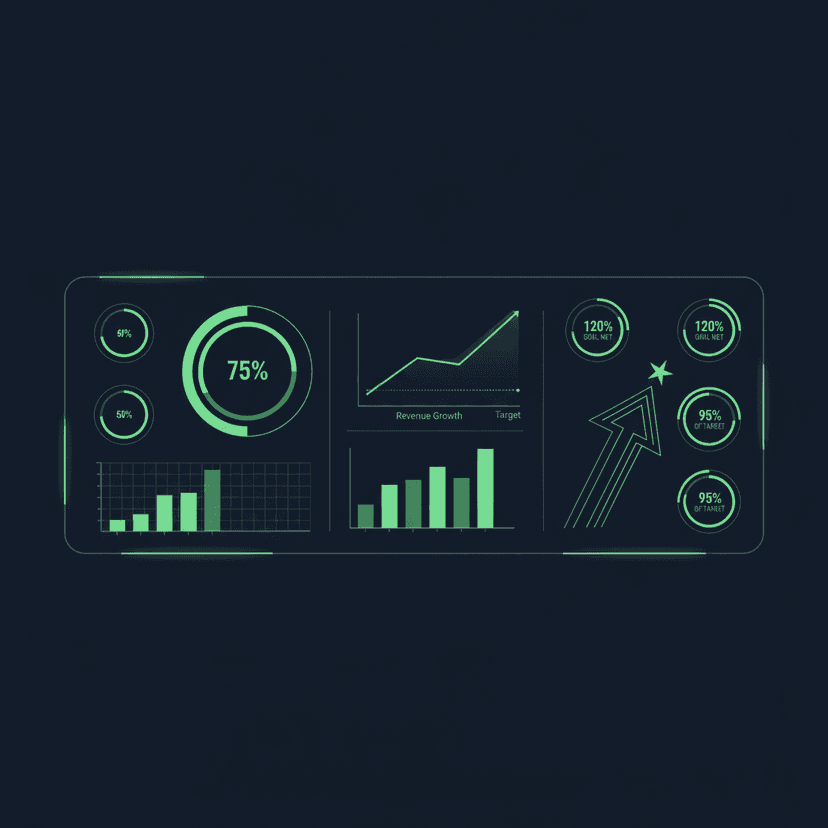
Automated Reporting
Automated Reporting
Increase the efficiency of your reporting through intelligent automation. We help you optimise and automate your reporting processes.
- ✓Reduction of manual effort
- ✓Higher data quality
- ✓Faster report creation
- ✓Improved decision-making foundations
Your strategic success starts here
Our clients trust our expertise in digital transformation, compliance, and risk management
30 Minutes • Non-binding • Immediately available
For optimal preparation of your strategy session:
- Your strategic goals and objectives
- Desired business outcomes and ROI
- Steps already taken
Or contact us directly:
Certifications, Partners and more...




Professional Reporting Management
Why ADVISORI?
- Comprehensive expertise in reporting automation
- Experience with BI tools
- Proven methods
- Focus on efficiency
⚠
Why automated reporting matters
Automated reporting reduces manual effort, minimises errors, and enables faster, data-based decisions.
ADVISORI in Numbers
11+
Years of Experience
120+
Employees
520+
Projects
We follow a structured approach to implementing your automated reporting.
Our Approach:
Analysis of the current situation
Solution design
Implementation of automation
Testing and optimization
Continuous improvement
"Automating our reporting has led to significant time savings and better decision-making foundations."

Asan Stefanski
Head of Digital Transformation
Expertise & Experience:
11+ years of experience, Applied Computer Science degree, Strategic planning and management of AI projects, Cyber Security, Secure Software Development, AI
Our Services
We offer you tailored solutions for your digital transformation
Reporting Strategy
Development of a tailored reporting strategy.
- Requirements analysis
- KPI definition
- Process design
- Tool selection
Automation
Implementation of automated reporting processes.
- Process automation
- Data integration
- Quality assurance
- Monitoring
Dashboard Development
Creation of interactive dashboards and reports.
- Visualisation
- Interactivity
- Real-time updates
- Mobile optimisation
Our Competencies in Datenmanagement & Data Governance
Choose the area that fits your requirements
Data Governance & Data Integration
We support you in developing sustainable data governance strategies and the smooth integration of heterogeneous data sources to optimize the quality, availability, and security of your corporate data.
Data Governance & Integration
Develop a sustainable Data Governance strategy with us and integrate your data sources effectively. We help you make optimal use of your data and protect it.
Data Quality Management & Data Aggregation
We support you in implementing effective data quality management processes and optimal data aggregation. From data cleansing and quality metrics to intelligent consolidation — building a solid foundation for your data-driven decisions.
Frequently Asked Questions about Automated Reporting
What distinguishes automated reporting from manual report creation?
Automated reporting eliminates repetitive manual steps such as data extraction, transformation, and formatting. Instead of assembling reports in Excel or PowerPoint, data from multiple sources is automatically consolidated, calculated, and delivered in dashboards or report formats. This reduces effort by
60 to
80 percent and significantly lowers data transfer error rates.
What prerequisites does an organisation need for automated reporting?
The most important prerequisite is a structured data foundation with clear definitions for KPIs and master data. You also need access to relevant data sources via APIs or database connectors and a clear picture of the reports required and their recipients. The technical infrastructure, whether cloud or on-premise, can be established during the project.
How long does it take to implement an automated reporting solution?
An initial production dashboard can be implemented in four to six weeks. Full automation of a reporting system with multiple data sources, ETL processes, and role-based dashboards typically takes three to six months. The exact timeline depends on the complexity of your data landscape and the number of source systems to be integrated.
Which BI tools are suitable for automated reporting in an enterprise environment?
The choice of BI tool depends on your existing IT landscape and requirements. Power BI works well in Microsoft environments, Tableau offers flexible visualisations, and Qlik excels with complex data models. For regulatory requirements, specialised solutions such as SAP Analytics Cloud or Jedox may be considered. We provide vendor-neutral advice on the right selection.
How does automated reporting improve data quality?
Automated processes eliminate manual transfer errors and enforce standardised calculation logic. Built-in validation rules check data for plausibility and completeness during processing. Additionally, automatic audit trails provide transparency on data lineage and transformation, improving traceability for both internal and external audits.
What does implementing automated reporting cost?
Costs depend on project scope. A single automated dashboard with data connectivity starts at roughly EUR 15,
000 to 25,000. A company-wide reporting platform with multiple data sources, ETL processes, and self-service capabilities typically ranges from EUR 50,
000 to 150,000. Return on investment usually becomes apparent within six to twelve months through saved personnel hours.
Can automated reporting be used for regulatory requirements?
Yes, automated reporting is particularly valuable in regulated environments. For supervisory reporting under BCBS 239, MaRisk, or CRR/CRD, data flows can be automated, validation rules implemented, and audit trails ensured. ADVISORI combines data governance expertise with regulatory knowledge to develop reporting solutions that meet both business requirements and compliance obligations.
Success Stories
Discover how we support companies in their digital transformation
Digitalization in Steel Trading
Klöckner & Co
Digital Transformation in Steel Trading
Case Study
Results
Over 2 billion euros in annual revenue through digital channels
Goal to achieve 60% of revenue online by 2022
Improved customer satisfaction through automated processes
AI-Powered Manufacturing Optimization
Siemens
Smart Manufacturing Solutions for Maximum Value Creation
Case Study
Results
Significant increase in production performance
Reduction of downtime and production costs
Improved sustainability through more efficient resource utilization
AI Automation in Production
Festo
Intelligent Networking for Future-Proof Production Systems
Case Study

Results
Improved production speed and flexibility
Reduced manufacturing costs through more efficient resource utilization
Increased customer satisfaction through personalized products
Generative AI in Manufacturing
Bosch
AI Process Optimization for Improved Production Efficiency
Case Study

Results
Reduction of AI application implementation time to just a few weeks
Improvement in product quality through early defect detection
Increased manufacturing efficiency through reduced downtime
Let's
Work Together!
Is your organization ready for the next step into the digital future? Contact us for a personal consultation.
Your strategic success starts here
Our clients trust our expertise in digital transformation, compliance, and risk management
Ready for the next step?
Schedule a strategic consultation with our experts now
30 Minutes • Non-binding • Immediately available
For optimal preparation of your strategy session:
Your strategic goals and challenges
Desired business outcomes and ROI expectations
Current compliance and risk situation
Stakeholders and decision-makers in the project
Prefer direct contact?
Direct hotline for decision-makers
Strategic inquiries via email
Detailed Project Inquiry
For complex inquiries or if you want to provide specific information in advance