GRC Tool Implementation
GRC Tool Implementation
Implement the right GRC platform for your governance, risk, and compliance processes. Whether SAP GRC, ServiceNow GRC, or Archer — our experts guide you from tool selection through deployment to full integration. Benefit from proven consulting methodology for a sustainable GRC solution.
- ✓Structured Tool Selection
- ✓Professional Implementation
- ✓Process Integration
- ✓User Training & Support
Your strategic success starts here
Our clients trust our expertise in digital transformation, compliance, and risk management
30 Minutes • Non-binding • Immediately available
For optimal preparation of your strategy session:
- Your strategic goals and objectives
- Desired business outcomes and ROI
- Steps already taken
Or contact us directly:
Certifications, Partners and more...




End-to-End GRC Platform Implementation: From Selection to Go-Live
Why ADVISORI?
- Extensive experience with leading GRC platforms
- Proven implementation methodology
- Focus on user acceptance and adoption
⚠
Success Factors
Successful GRC tool implementation requires careful planning, clear requirements, and structured change management.
ADVISORI in Numbers
11+
Years of Experience
120+
Employees
520+
Projects
We follow a proven methodology for successful GRC tool implementation.
Our Approach:
Requirements analysis and tool evaluation
Solution design and configuration planning
Implementation and system integration
Testing, training, and user acceptance
Go-live support and continuous optimization
"ADVISORI supported us in selecting and implementing our GRC tool. The structured approach and expertise ensured a smooth implementation."

Sarah Richter
Head of Information Security, Cyber Security
Expertise & Experience:
10+ years of experience, CISA, CISM, Lead Auditor, DORA, NIS2, BCM, Cyber and Information Security
Our Services
We offer you tailored solutions for your digital transformation
Tool Selection & Evaluation
Systematic selection of the right GRC tool for your requirements.
- Requirements analysis and specification
- Market analysis and vendor evaluation
- Proof of concept and tool demonstrations
- Decision support and vendor selection
Implementation & Configuration
Professional implementation and configuration of your GRC tool.
- System setup and basic configuration
- Customization to your requirements
- Workflow design and automation
- User roles and permissions setup
Process Integration
Integration of the GRC tool into your existing processes and systems.
- Process mapping and optimization
- Integration with existing systems
- Data migration and import
- Interface development and API integration
Training & Change Management
Comprehensive training and change management for successful adoption.
- User training and workshops
- Administrator training
- Change management and communication
- Documentation and user guides
Testing & Quality Assurance
Comprehensive testing to ensure quality and functionality.
- Functional testing and validation
- User acceptance testing (UAT)
- Performance and load testing
- Security testing and compliance checks
Go-Live & Support
Support during go-live and ongoing optimization.
- Go-live planning and execution
- Hypercare and immediate support
- Performance monitoring and optimization
- Continuous improvement and enhancement
Our Competencies in Enterprise GRC
Choose the area that fits your requirements
GRC Reporting Framework
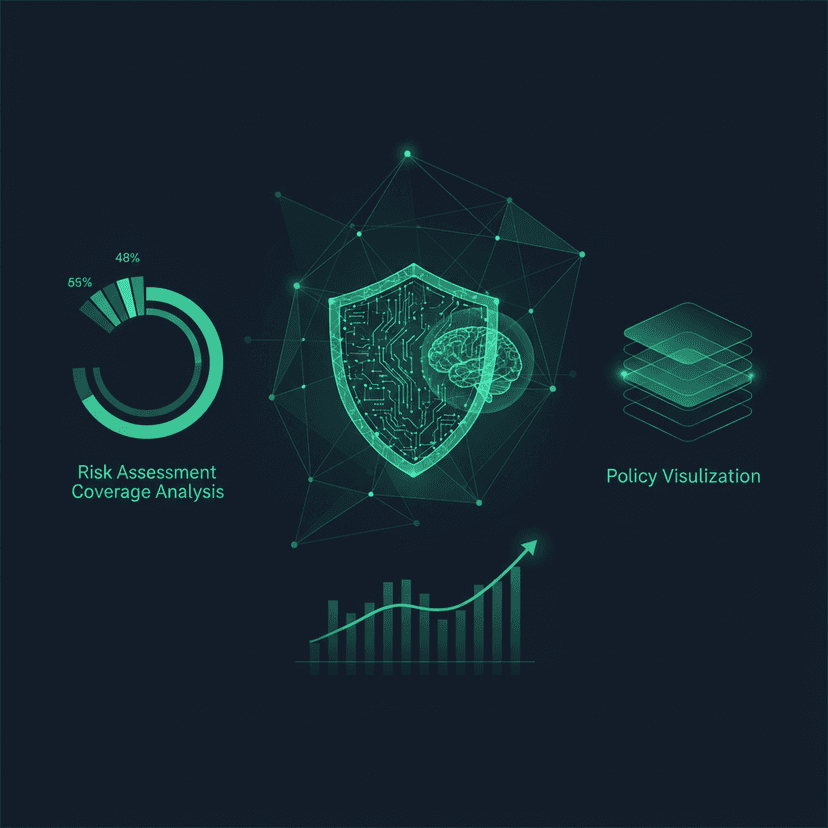
An effective GRC reporting framework is crucial for deriving meaningful insights from your GRC data for different stakeholders. We support you in designing and implementing a customized reporting framework that automates compliance reporting, meets regulatory reporting requirements and enables transparent risk communication through a centralized GRC dashboard.
GRC-Operating-Model
Develop a tailored GRC operating model that defines clear accountabilities aligned with the three lines of defense model, establishes an integrated internal control framework, and creates efficient processes for your governance, risk, and compliance management. We support you in designing, building, and optimizing your GRC operating model — from role definition and process design to GRC technology integration.
Regulatory Change Coaching
Regulatory requirements evolve constantly — from DORA to MaRisk to NIS2. Our Regulatory Change Coaching guides your organization through complex regulatory transformations. With systematic regulatory intelligence, structured change management processes, and proven methodologies, you implement new compliance requirements efficiently and sustainably.
Frequently Asked Questions about GRC Tool Implementation
What is a GRC tool?
A GRC tool is software that supports the management of Governance, Risk, and Compliance processes. It provides a central platform for managing policies, risks, controls, audits, and compliance requirements, enabling efficient and transparent GRC management.
Why is a GRC tool important?
A GRC tool enables systematic and efficient management of governance, risk, and compliance processes. It provides transparency, supports decision-making, automates workflows, and helps meet regulatory requirements while reducing manual effort.
What functions should a GRC tool have?
Essential functions include policy management, risk assessment and management, control management, compliance monitoring, audit management, incident management, reporting and dashboards, workflow automation, and integration capabilities with other systems.
How do I select the right GRC tool?
Selection should be based on a thorough requirements analysis considering your specific needs, regulatory requirements, existing system landscape, scalability requirements, user-friendliness, and total cost of ownership. A structured evaluation process with proof of concepts is recommended.
What are the costs of a GRC tool?
Costs include license fees (often subscription-based), implementation costs, customization and configuration, training, ongoing maintenance and support, and potentially costs for integrations. Total cost of ownership should be considered over the entire lifecycle.
How long does GRC tool implementation take?
Implementation duration depends on scope, complexity, and organizational readiness. A basic implementation can take 3–6 months, while comprehensive implementations with extensive customization and integrations may take 6–12 months or longer.
What are common challenges in GRC tool implementation?
Common challenges include unclear requirements, insufficient change management, data quality issues, complex integrations, user resistance, inadequate training, and underestimating the effort required. Professional support can help overcome these challenges.
How is user acceptance ensured?
User acceptance is achieved through early involvement of users, clear communication of benefits, comprehensive training, intuitive user interface, quick wins and visible successes, continuous support, and consideration of user feedback in configuration.
Can a GRC tool be integrated with existing systems?
Yes, modern GRC tools offer extensive integration capabilities via APIs, standard interfaces, and connectors. Integration with systems like ERP, HR, IT service management, and other compliance tools is typically possible and often necessary for efficient processes.
What role does data migration play?
Data migration is a critical success factor. Existing data on risks, controls, policies, and compliance requirements must be transferred to the new system. This requires careful planning, data cleansing, mapping, testing, and validation to ensure data quality and completeness.
What training is required?
Training should be role-based and include end-user training for daily work, administrator training for system management, power user training for advanced functions, and management training for reporting and dashboards. Hands-on workshops and ongoing support are recommended.
How is data security ensured?
Data security is ensured through access controls and role-based permissions, encryption of data at rest and in transit, audit trails and logging, regular security updates, compliance with security standards (ISO 27001), and regular security audits and penetration testing.
Can the GRC tool be customized?
Yes, modern GRC tools offer extensive customization options including custom fields and forms, configurable workflows, custom reports and dashboards, branding and user interface adjustments, and custom integrations. The extent of customization depends on the specific tool.
What is the difference between cloud and on-premise solutions?
Cloud solutions (SaaS) offer faster deployment, lower initial costs, automatic updates, and scalability, but less control over data. On-premise solutions provide more control, customization options, and data sovereignty, but require higher initial investment and internal IT resources.
How is reporting handled?
GRC tools offer standard reports for common requirements, customizable reports and dashboards, real-time reporting and KPIs, export functions (PDF, Excel, etc.), scheduled report distribution, and drill-down capabilities for detailed analysis.
What role does change management play?
Change management is critical for success. It includes stakeholder analysis and communication, training and support, addressing resistance and concerns, celebrating quick wins, continuous feedback and improvement, and ensuring management support and sponsorship.
How is the tool maintained after go-live?
Ongoing maintenance includes regular updates and patches, user support and helpdesk, performance monitoring and optimization, continuous training and onboarding, adaptation to new requirements, and regular review and improvement of processes.
What metrics measure implementation success?
Success metrics include user adoption rate, process efficiency improvements, time savings in GRC processes, data quality and completeness, compliance rate, user satisfaction, ROI and cost savings, and reduction in audit findings.
Can the tool grow with the organization?
Yes, scalability is an important selection criterion. Modern GRC tools support growth through modular architecture, flexible licensing models, support for multiple entities and locations, performance for large data volumes, and extensibility through APIs and integrations.
How can ADVISORI support GRC tool implementation?
ADVISORI offers comprehensive support from requirements analysis and tool selection, through implementation and configuration, to training and change management. We ensure your GRC tool is optimally tailored to your needs and successfully adopted by your organization.
Success Stories
Discover how we support companies in their digital transformation
Digitalization in Steel Trading
Klöckner & Co
Digital Transformation in Steel Trading
Case Study
Results
Over 2 billion euros in annual revenue through digital channels
Goal to achieve 60% of revenue online by 2022
Improved customer satisfaction through automated processes
AI-Powered Manufacturing Optimization
Siemens
Smart Manufacturing Solutions for Maximum Value Creation
Case Study
Results
Significant increase in production performance
Reduction of downtime and production costs
Improved sustainability through more efficient resource utilization
AI Automation in Production
Festo
Intelligent Networking for Future-Proof Production Systems
Case Study
Results
Improved production speed and flexibility
Reduced manufacturing costs through more efficient resource utilization
Increased customer satisfaction through personalized products
Generative AI in Manufacturing
Bosch
AI Process Optimization for Improved Production Efficiency
Case Study
Results
Reduction of AI application implementation time to just a few weeks
Improvement in product quality through early defect detection
Increased manufacturing efficiency through reduced downtime
Let's
Work Together!
Is your organization ready for the next step into the digital future? Contact us for a personal consultation.
Your strategic success starts here
Our clients trust our expertise in digital transformation, compliance, and risk management
Ready for the next step?
Schedule a strategic consultation with our experts now
30 Minutes • Non-binding • Immediately available
For optimal preparation of your strategy session:
Your strategic goals and challenges
Desired business outcomes and ROI expectations
Current compliance and risk situation
Stakeholders and decision-makers in the project
Prefer direct contact?
Direct hotline for decision-makers
Strategic inquiries via email
Detailed Project Inquiry
For complex inquiries or if you want to provide specific information in advance